Posted on Leave a comment

DIY Interchangeable Glass Frame Sign with Silhouette Studio – One Project for All Seasons

Silhouette Secrets+ with EllyMae

Looking for a versatile home décor project you can enjoy all year long? This DIY Interchangeable Glass Frame Sign with Silhouette Studio is the perfect solution! Using a simple glass frame, adhesive vinyl, Sharpie Creative Markers, and Epson Presentation Paper, you can create a custom sign with beautiful digital backgrounds and sayings that can be swapped out for every day decor, seasonally, or for holidays. Designed entirely in Silhouette Studio, this project combines the ease of printable designs with the precision of vinyl cutting, making it beginner-friendly yet completely customizable. Whether you’re decorating for spring, adding a spooky touch for Halloween, or creating a cozy Christmas look, this reusable sign is a budget-friendly craft you’ll use again and again.

Affiliate links may be present in the following blog post and as an Amazon Associate, I earn from qualifying purchases.

For this project, you may even have all the supplies available in your craft stash or think about what you could use as an alternative. I’ve listed the supplies I used below, so you can recreate it too! Don’t limit yourself to these designs either! Think Halloween, Christmas, Winter, and more! I’ll add photos to this blog post as I create more too!

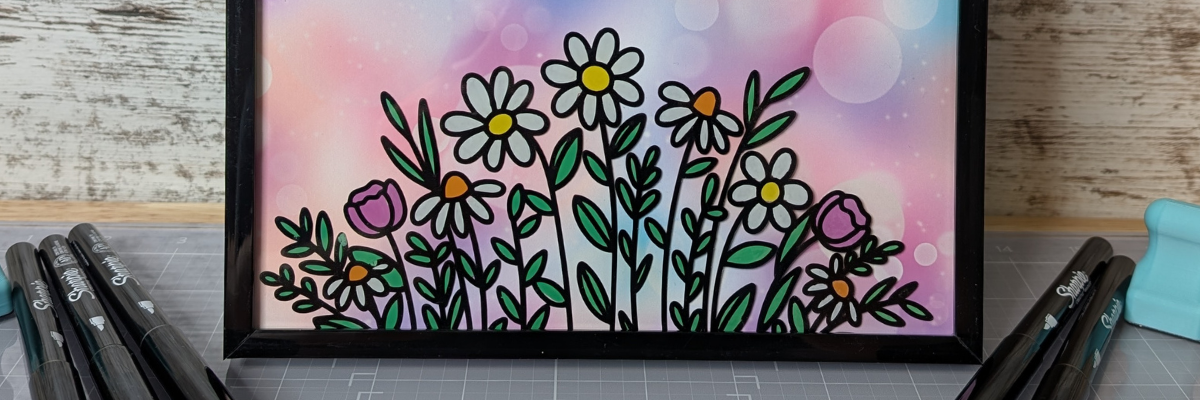
A DIY interchangeable glass frame sign featuring the text 'hello FRIENDS' with a pastel bokeh background and floral designs at the bottom. Surrounding the frame are Sharpie Creative Markers in various colors and crafting tools.

DIY Interchangeable Glass Sign Supplies:

How to Create a DIY Interchangeable Glass Sign

Gather the supplies. I grabbed an 8″ x 8″ glass frame from my supply closet, some scrap adhesive vinyl in black, some transfer tape and my Sharpie Creative Markers.

DIY interchangeable glass frame sign supplies photo. A workspace with a Silhouette cutting machine, colorful Sharpie Creative Markers, a black adhesive vinyl sheet, and a glass frame on a wooden table.

Measure the inside of the frame you are using. Even if the photo frame states a certain dimension, make sure to measure it and verify so that you don’t end up with a print that is too small like I did.

Open Silhouette Studio and using the Drawing Tools, draw a rectangle. Size the rectangle to the measurements taken using the Scale Tools and verify it again.

Screenshot of Silhouette Studio software displaying printable background designs featuring floral elements and text elements like 'life is beautiful' and 'hello FRIENDS' for a DIY interchangeable glass frame sign

I designed 3 different backgrounds at the same time. Use the Silhouette Studio software to create the entire design, including sizing the flower shapes to fit within the shape you are working with.

Now comes the longest part of the entire project – selecting a background pattern and the quotes you want to use. This is what always takes me the longest in creating.

There are multiple ways to add a pattern to a shape. Check out the additional resources below for several options.

I selected the square and then clicked on the library tab in the top right. Then selected a pattern from under my Patterns Folder in the Silhouette library and just continued to do that until I found the ones I wanted. I have 1100 patterns in my Silhouette library, so it took me awhile to make a decision.

A DIY interchangeable glass frame sign displaying the phrase 'life is beautiful' over a colorful gradient background with flowers, accompanied by various markers and crafting tools.

Repeat these steps to create as many backgrounds as you choose.

When ready to cut, it’s a great idea to use File > Save As and create a “cut file”, so you keep an original working file that could be referred back to if needed.

When ready, move the flowers away from the background design. Change the line color of the sentiment to transparent. You do not want the red cut line to print around the image and have to reprint. A line thickness greater than 0 on any line in Silhouette Studio will print out.

Various printed designs for a DIY interchangeable glass frame sign, featuring quotes and decorative backgrounds, laid out on a crafting table with a cutting machine in the background.

I am using Epson Presentation Paper – Matte with my Canon TS9521C printer on the photo matte high quality setting. Every printer can vary in what colors look like and the only way to know what the colors will be is to test with your printer. See additional resources below.

Next, cut the flower design (or whatever design you are using) from adhesive vinyl. Make sure that the adhesive vinyl you use is the same color on the backside as the front. This will be applied on the backside of the glass frame.

Tabletop setup for a DIY project featuring a black glass frame, cutting mat with flower designs, adhesive vinyl, and various paper backgrounds.

Weed the adhesive vinyl design and apply transfer tape to the entire design.

Clean the backside of the glass frame carefully and let dry.

Then, carefully apply the design to the backside of the glass frame.

Tip: (not shown) Use painter’s tape along the edges of the glass to make it safer to handle and prevent cuts from the glass edges.

A flat lay image showing various crafting supplies for a DIY project, including black Sharpie markers, a ruler, a clear plastic mat with a floral black vinyl design, and a black frame, with colorful patterned papers in the background.

After applying the adhesive vinyl, don’t worry about seeing the adhesive of the vinyl on the front side. As the vinyl sits on the glass and the adhesive sets up, the adhesive look will disappear. Just make sure to apply the adhesive vinyl smoothly and make sure all areas are adhered well to the glass.

Next, on the backside of the glass, start coloring in the design as desired with the Sharpie Creative Makers. These work great on glass!

Close-up of a hand using a green Sharpie marker to color in a floral design on a glass surface with a black vinyl outline.

Don’t worry too much about it looking a bit messy or coloring only in the lines, you won’t see the backside of the glass.

An assortment of colorful Sharpie markers placed above a hand-drawn floral design on a transparent surface, featuring daisies and pink flowers.

Let the paint dry. Add additional coats as needed for the desired look.

While it dries, grab a paper trimmer and trim down the printed backgrounds. I did not set this up for a print and cut as I would have lost space and not been able to fill my frames completely. Plus, it is 4 straight edge cuts per page. A good quality paper trimmer is a great tool to have in your craft supplies.

A decorative interchangeable glass frame sign featuring inspirational quotes surrounded by colorful floral designs, with Sharpie Creative Markers placed nearby.

And then all that’s left to do is to add the background paper into the frame and secure it.

Grab some photos of your awesome project and think of new ideas that you can swap out the background with or keep it up all year long!

1 frame = endless possibilities!

Additional Resources:

DIY Interchangeable Glass Sign Additional Photos

(I’ll add more photos as I create additional backgrounds to swap out.)

Save this for future reference by pinning the image below.

A DIY glass frame sign featuring a pastel background with the words 'hello' and 'FRIENDS,' along with colorful floral designs at the bottom, demonstrating a versatile home decor craft.

Enjoy !

THANK YOU for your support! How can you help? Click HERE & buy a coffee.
Every little bit helps with the cost of running the site.

Silhouette Classes

Never stop learning! Let me help you take the anxiety out of learning with Silhouette and get to creating faster! My Silhouette classes are heavily focused on software, so you can take the skills & techniques taught and apply them to many future projects!

Silhouette step-by-step Classes by Silhouette Secrets+

Silhouette Secrets+ with EllyMae
**This post may contain affiliate links. What that means is that I may receive compensation if you purchase through the links I have provided. The price you pay for the product or service is not higher but I may get compensated for sharing.

Posted on 3 Comments

Silhouette Studio: Testing Print Colors

Silhouette Testing Print Colors
Silhouette Secrets+ with EllyMae

The Silhouette Studio software allows you to print directly from the program to any printer that is setup on your computer. This action can be performed easily by going to File > Print and selecting the printer you are using once the design is ready to print. However, the colors you see on the computer screen may not be the actual results that print out from your printer.

Silhouette Print in Color

Affiliate links may be present in the following blog post and as an Amazon Associate, I earn from qualifying purchases.

Factors That Can Affect Printed Colors

  1. A computer monitor is not calibrated to print colors. Each brand of computer monitor can vary in the visual representative that you see.
    If you were sitting next to someone else using the exact same Silhouette Studio software version, your colors may not appear the same on screen as that person next to you simply because you are using different computers.
  2. Computer monitors display in RGB (Red Green Blue) versus printers that are CYMK (Cyan, Yellow, Magenta, black) – this can affect the actual printed results versus what is seen on the screen.
  3. There are many different brands and models of printers out there on the market being used worldwide. Different brands and models of printers can yield different results.
  4. Printer ink can vary by brand and yield different results.
  5. The material being printed on can affect the colors. Different materials absorb the ink and the final color you see can vary depending on the material.
    For instance, plain cardstock will absorb more ink into the paper versus a glossy photo paper. This can make the color appear muted on the cardstock versus a more vibrant print on a shiny gloss of photo paper.
  6. The printer settings selected when printing can affect color outcome. Each printer model has different settings it can print at and what you select for the print job sent can affect the final outcome of colors. For example, draft settings versus normal versus photo quality.
  7. Printer drivers can affect the outcome of colors and other options available, such as print page size, etc. For best results, install the full printer drivers direct from the printer manufacturer’s website for your specific printer model. Simply plugging in a printer or connecting it to your computer does not usually install the full printer drivers. While it may print, it may not have all the options of the full print driver as it’s using a default driver that’s in the computer operating system to perform basic print functions.
  8. Computer operating systems (OS) and updates. Print quality can vary by Windows versus MAC and also by the OS updates on those computer systems. We have seen print color output change overnight with a computer OS update.
  9. Different software programs can have different print color results.

Now that we’ve covered a few things that can make the difference, how can you test what colors you see versus what colors you get when printing?

Silhouette Studio: Color Test Print

Draw out 1-inch squares (or larger if needed) and replicate to fill the page

Silhouette Studio Test Print Squares

Open the Fill Color Panel and fill each square with a color that you want to test print.

Silhouette Fill Color Panel

The full Fill Color Panel on the right side of the Silhouette software has several options for adding colors. Use the preset colors, add your own custom color, or add in colors by HEX, HSL, or RGB codes. Create your own custom color palettes too for easy access on future projects.

Silhouette Fill Color Panel Entering Hex codes for test print

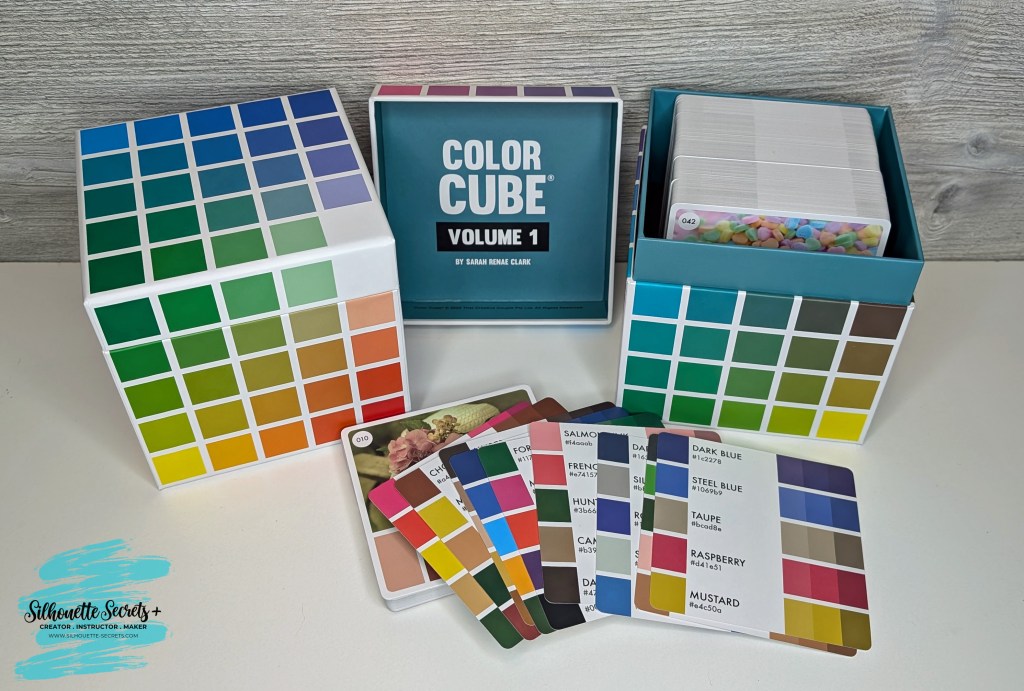
I used the Color Cubes by Sarah Renae Clark to fill in a page of color combinations that I want to test print.  The color cards give 5 colors with the HEX code for each color and also have shades of that color shown on the card.

Color Cubes by Sarah Renae Clark

In the Silhouette Studio software, at the bottom of the Fill Color Panel, you can adjust the color to another shade easily by moving the custom color dot around on the color palette.

Silhouette Fill Color Panel Custom Palette

Once page is filled as desired, then select File > Print in top left corner.

Silhouette File Print Preview

Verify on the Print Preview that everything will be printed as desired. The print preview is where you can catch errors before you waste ink printing. For instance, if the design is not showing completely and is cut off, that can indicate the wrong printer is selected or the page size is incorrect. There is still time to make changes before you commit to printing and using ink.
If you are doing a print and cut project, verify that all 3 registration marks show as printing completely on the page before you click print.

When ready, click Print. The printer menu will pop up and you can select what options you would like to print at and where to print from. I use the rear tray on my printer when printing any specialty materials or cardstock.

Silhouette File Print Printer Menu

If you make any changes such as the actual printer being used or the page size, you will need to apply those changes and then cancel out to the main design screen to reset those settings completely.

Once printed, you can see how the colors will print on that particular material. It’s always best to test on the actual material you will be using to know for sure.

Test Print from Silhouette Studio

I printed this on higher quality copy paper using the regular print settings from my printer. I was also notified that one ink cartridge was low on ink, so I know that will affect the colors that are printed as well.

Additional Tips for Printing:

Objects or designs need to be filled with color to print.

Silhouette Studio is designed as a cutting software. That means the red lines you see on the design mat are cut lines for a Silhouette machine to follow. When a shape is drawn or text typed out, it is generally not filled with any color and the software sees it as empty. Which is exactly how it will print to a printer if sent. This is one great thing about utilizing print preview, you can catch issues before you’ve actually tried to print the project.

Cut lines do not print unless told to do so.

There are 2 options if you want the line of an object to print.

1 – Increase line thickness above 0. Any line thickness above 0 will print on the material.

    Silhouette Increase Line Thickness for Printing

    Here is what the text above will show on the Print Preview when the top text line is set to 0 line width and the bottom is set to 1.75.

    Silhouette Print Preview Line Thickness Increased

    2 – Select the objects you want the lines to print on and check the Print Lines of Selected Shapes box on the bottom of the Line Style Panel.

    Silhouette Print Lines of Selected Shapes

    Here is what the text above will show on the Print Preview when the top text has the print lines of selected shapes chosen.

    Silhouette Print Preview of Print Lines Selected

    There is also an italic note stating: This will display your 0 pt cut lines as 0.1 pt lines in prints and in SVG and PDF exports.

    Sublimation prints need to be pressed to show true color.

    If you are printing using sublimation inks, the true colors will not show until the design has been pressed. A sublimation print will always look dull or muted prior to pressing.
    For best results and the most accurate colors, press onto 100% polyester. This will show the final colors

    New equipment may not function the same as old equipment.

    Getting a new, updated printer model can be a great thing! However, users can be quickly frustrated when things do not work the same or the new printer doesn’t print the same colors the same as the old one did. It can take some getting used to for all new equipment.

    Low ink of any cartridge or tank can affect the color outcome.

    Most home printers have a set of color cartridges or tanks, for instance, my Canon TS9521C has 3 colors and 2 black cartridges. To make up the colors you are asking it to print, the printer combines those inks in order to make the color output. If a color cartridge or tank is low on ink, it may not yield the desired results.

    The results that each user sees and has when printed can vary simply because we all have different equipment we are using.

    Additional resources:

    And check out the Silhouette Live Tutorial – Colors in Silhouette HERE on the Silhouette Secrets+ YouTube channel.

    Silhouette Live Tutorial on YouTube about Colors

    Save this for future reference by pinning the image below.

    Silhouette Testing Print Colors Pin

    Enjoy !

    THANK YOU for your support! How can you help? Click HERE & buy a coffee.
    Every little bit helps with the cost of running the site.

    Silhouette Classes

    Never stop learning! Let me help you take the anxiety out of learning with Silhouette and get to creating faster! My Silhouette classes are heavily focused on software, so you can take the skills & techniques taught and apply them to many future projects!

    Silhouette step-by-step Classes by Silhouette Secrets+

    Silhouette Secrets+ with EllyMae
    **This post may contain affiliate links. What that means is that I may receive compensation if you purchase through the links I have provided. The price you pay for the product or service is not higher but I may get compensated for sharing.