Posted on Leave a comment

Cutting Faux Leather with Your Silhouette: Essential Tips

I’ve wanted to write a faux leather tutorial with tips for Silhouette for a long time, but other things seemed to jump in front of it on my to-do list. So when Amy announced her Faux Leather event, I made it a goal to really dive in and create with some faux leather.

Affiliate links may be present in the following blog post and as an Amazon Associate, I earn from qualifying purchases.

Amy Romeu, hailed as the Queen of Faux Leather by many, recently hosted an event that I attended. I had a great time crafting along with her videos and picked up a lot of great tips that can help in being successful in cutting faux leather with any cutting machine.

Before we get too far in, let’s cover a few things about faux leather that will help in the process.

Faux Leather Information

Can Silhouette machines cut faux leather? Yes!
Can Silhouette machines cut ALL faux leather? NO!
Can all cutting machines cut ALL faux leather? NO!

Faux leather is such a broad term, just like “genuine” leather is. Cutting some faux leathers is easy, some pose greater difficulty, and others simply do not cut well at all.

Factors influencing whether a Silhouette or another machine can cut faux leather include:

  • Color – Yes! Many users don’t know this, but color affects how materials cut. Different colors go through different processes in the production and that can affect how it cuts. Some can be tougher than others due to coloring.
  • Backing – Faux leathers can have a variety of backing on it. Some don’t have any and are soft and pliable. While others can have a mesh, woven backing which can be difficult to cut through.
  • Texture – Faux leathers can come in all kinds of textures such as embossed, glitter, sequins, etc. This will affect how it cuts. Just think of a blade trying to bounce over a texture material to cut a clean line. Texture affects it! The texture also influences the ease of cutting by hand. The same is true for a cutting machine.
  • Thickness – There is a wide array of thicknesses for faux leather. Super thin ones can be too pliable and just smoosh around on the cutting mat. Thicker ones may need multiple passes to cut through and a longer blade such as the Deep Cut blade.
  • Composition – Faux leather is such a broad term. The definition of “faux” is artificial or fake. So keep in mind that faux leather is fake leather.
    What it is made of?
    A wide variety of things. Plastic mostly. For instance, I ordered some leather on Amazon and it is PU Leather. It is by definition, artificial leather, crafted from a thermoplastic polymer commonly employed in the production of furniture or shoes.
    Faux leather = fake leather = plastic

Supplies I Used:

Faux Leather Varieties
Craft Chameleon Warehouse Faux Leather Supply

So the first place to start is to gather your supplies for whatever you are working on. I was so excited for these projects and I knew I would be creating several, so I pulled out all my faux leathers and my scrap HTV. I have several boxes of scrap HTV and it’s a great way to use it by adding it to faux leather projects.

Supplies for Faux Leather Projects

Keep it a secret, but I actually obtained more faux leather than shown because I needed to test several during these projects. And once I went down that rabbit hole, I found many patterns I wanted to collect.

Faux Leather Variety
Faux leather from The Polka Dotted Peach

Tips for Cutting Faux Leather with Silhouette

  • Cut the faux leather down to size and give yourself some extra space for taping down the edges to the cutting mat.
  • Place the faux leather front facing down on the cutting mat, so you are cutting through the backside first.
    **NOTE: if cutting real leather, DO NOT place it face down or you can ruin the finish on the real leather. That can be a very expensive mistake!
Tape Faux Leather to a Silhouette Cutting Mat

  • Utilize a reliable sticky cutting mat to secure the materials in place during the cutting process. Using a brayer to smooth the materials down to secure it. If the materials shift during the cut, the cut may fail, or your blade might become stuck.
  • Securely tape down the material edges. I found that using longer pieces of tape not only ensured a better hold but also reduced the risk of it getting caught in the machine during cutting. You can also reuse painter’s tape if removed carefully at the end.
  • For best results, keep the painters tape away from the edges of the cutting mat so it is not going under the rollers. Any change in the surface area under the rollers and it can cause it to lose grip or the left and right roller to not move at the same rate, which can cause issues.
  • When using a Silhouette cutting mat, you can use the grid for exact placement for lining up your materials and your design. If you load the mat properly, the on-screen design will align with the Silhouette cutting mat. Third party cutting mats may not line up and it will be a guessing game for design placement and alignment.
Faux Leather Tips for Silhouette

  • Give yourself a good allowance and grace because you may still mess up, just like I did in the photo above. I would recommend that you cut a little bit excess of the faux leather and not try to cut through the painters tape as it can affect the cut results. The cut was ok in this instance, but it went off my faux leather, so I ended up cutting another truck piece.
  • For tips on lining things up check out this tutorial HERE. I use this method all the time and still make mistakes. Remember to “measure twice, cut once.” But, I find I make the most mistakes if I’m rushing or I tell myself it will be just a quick project.
  • Test cut, test cut, test cut!!!
  • I used a 2 mm Manual blade for all of my faux leather cuts. This blade is the equivalent of the older style Premium blade, it’s just redesigned to fit directly into the newer model machines housing without needing an adapter.
    The 2 mm Manual blade (or Deep Cut blade) allows you to go from 1-20 in the blade depth settings. All faux leather will vary and some can be cut with a regular blade that is 1-10 settings, while others may need a higher blade depth than 10. Test cuts are the way you will know.
  • Do not unload the mat after you cut!!! Check to see how well it cut.
    Having a thread or two is not a bad thing! Grab a sharp pair of scissors and simply snip it.
Check the cut on the Faux Leather after Silhouette cuts

  • If it does not lift easily or has more than just a few threads hanging on, send the cut again. If you have not unloaded the cutting mat, it should cut again in the exact same place. If you unload the cutting mat, it will be a hope and a prayer trying to get it lined up perfectly again to cut in the same place.
Clean cuts on Faux Leather with Silhouette

  • Some faux leathers may take more than 1 pass and this is why test cutting is such an important step. I write down the settings that worked for each of the materials I test and keep a log so I can refer back to it. It is not a bad thing to use more than 1 pass with certain projects. I find with thicker materials, you can get a cleaner cut when you are not trying to force the machine to do it all at once time. However, for thinner materials such as adhesive vinyl or regular cardstock, multiple passes shouldn’t be necessary if the blade is installed properly.

For more details on what blade depth and force are, check out this in-depth tutorial on the Silhouette Send tab HERE.

Cut Success with Silhouette and Faux Leather

  • Once the cut is successful, unload the mat, remove the painter’s tape – it can be reused and carefully peel away the excess. Snip any threads as you carefully remove the excess so you do not stretch the design.
  • When cutting, check the blade regularly for debris stuck to it or inside the cap. The fibers of the faux leather can hinder the cut results.
  • It is perfectly normal to have to increase the settings of the blade as you cut materials. A blade cutting any material is going to dull with usage. Keep in mind that you are cutting through plastic and fibers. That will cause a blade to wear differently than other materials.

For this design I used the Red Truck Ornament file from Amy Romeu and there is a front and back layer cut from faux leather that will be glued together. The rest of the design is cut from HTV, so I swapped out my blade for my HTV blade and set up my cutting mat to cut different colors of scraps at the same time.

Cut by Color in Silhouette Studio

I used the Cut by Fill Color so I could set up different cut settings for my Smooth HTV versus my Glitter HTV. The Autoblade did all the work to change the settings once set up. Check out this tutorial HERE for tips on cutting by line or fill color – they are the same.

Cut multiple colors at once on a Silhouette Cutting Mat

And then I set up my cutting mat to match exactly what I had set up on the Silhouette software. Check out tips on cutting multiple colors at the same time HERE.

Red Truck Faux Leather Ornament

Then I simply weeded the design and pressed the pieces on according to Amy’s instructions. I also cut this design out of cardstock and adhesive vinyl too! The faux leather ornament is on the left and the cardstock ornament is on the right.

Check out Amy Romeu’s YouTube video HERE for instructions on the assembly. Even though she is using a Cricut machine to cut, the process and tips are useful.

I was having so much fun cutting faux leather that I couldn’t stop and wanted to test more!

Next, I used this Silver Embossed Leather from Craft Chameleon with the Initial Ornament file.

Embossed Faux Leather Initial

I followed the same tips as above and taped it securely to my cutting mat.

Secure Faux Leather with Painters Tape on a Silhouette Cutting Mat

If you compare this photo to the first one, you’ll notice that the backing differs on the white versus this silver embossed piece. That can affect the cut settings and results. The woven backing texture can be a bit more difficult to cut and may require higher settings and more passes to cut cleanly.

I used the 2 mm Manual blade (equivalent of the Deep Cut blade).
Blade depth – 9
Force – 30
Passes – 2-3
however, that was still not a clean cut, so I then increased the Blade depth to 11 and did 2 more passes.

In this case, the Embossed texture on the front is uneven and can affect the cut.

Embossed Faux Leather Initial Ornament

I did not have all the supplies to finish this out as Amy did, so I used what I had on hand and made my own holly berries and leaves. The holly leaves are drawn from scratch in Silhouette Studio. If you want to learn how, I show step-by-step in the Designing in Silhouette Studio – Creating Keepsake Ornaments class HERE. I cut the leaves from cardstock, painted some small craft balls, and then glued it all onto the ornament.

Check out Amy Romeu’s Initial Faux Leather Ornament YouTube video HERE for more details on this project. I picked up a neat trick for tying bows and ornament hangers in Amy’s videos, so make sure to check that out too!

In both the designs shown above, the faux leather was cut for the front and the backside and then glued together so it had a finished look. But for this next project, I used Siser Metal HTV and adhered it to the backside of the white faux leather from Craft Chameleon before cutting.

Faux Leather with HTV backing

I pressed it once with the carrier sheet on and then a second time without the carrier sheet for just a few seconds. The second press allows the texture of the faux leather to show through and it is gorgeous! Photos do not do it justice.

Faux Leather Earrings with Silhouette

But keep in mind, anytime you add something to a material, that can change the cut settings.

I used the 2 mm Manual blade (equivalent to the Premium blade).
Blade depth – 10
Force – 30
Passes – 1
And I probably could have done one more pass.

Now, what you’ll notice is that all of the pieces are still attached. However, they easily popped out and I only had a few threads to snip. This actually worked better for the next steps as I could keep it all organized in one place until I was ready to press.

Snowflake Faux Leather Earrings

I loved the finished look of the Siser Metal HTV on the backside! And I used up a few scraps of Glitter HTV, not much, but it is the perfect project for those scraps that you might have.

Check out the video on these Faux Leather Holiday Earrings HERE by Amy Romeu.

And here is one more faux leather design cut with my Silhouette.

Cardinal Faux Leather Ornament

This was using the Cardinal Christmas Ornament Design and a piece of blue patterned faux leather from The Polka Dotted Peach.

Find the Faux Leather Cardinal Ornament video HERE on Amy’s YouTube channel.

I had so much fun creating along with this event and now have faux leather for many more projects.

I hope those tips help you to be successful with cutting faux leather with your Silhouette machine.

You can still purchase the VIP package for the Faux-La-La Crafting Fun and join in on the fun. You get the files for all the projects, all the videos in one place, a printable guide, and more! Check it out HERE for all the details.

Faux Leather Event

Save this for future reference by pinning the image below.

Pinterest Faux Leather with Silhouette

Enjoy !

THANK YOU for your support! How can you help? Click HERE & buy a coffee.
Every little bit helps with the cost of running the site.

Silhouette Classes

Never stop learning! Let me help you take the anxiety out of learning with Silhouette and get to creating faster! My Silhouette classes are heavily focused on software, so you can take the skills & techniques taught and apply them to many future projects!

Silhouette step-by-step Classes by Silhouette Secrets+

Silhouette Secrets+ with EllyMae
**This post may contain affiliate links. What that means is that I may receive compensation if you purchase through the links I have provided. The price you pay for the product or service is not higher but I may get compensated for sharing.
Posted on Leave a comment

DIY Custom Wine Bag with Artesprix Sublimation Inks

Let’s Celebrate with a bit of Cheers!

Whether you are celebrating on New Years or for some other event throughout the year, bring a little something with you and add a special touch. This month I’m sharing how to create a custom wine bag with Artesprix Sublimation supplies in a few easy steps on the Artesprix YouTube channel.

Affiliate links may be present in the following blog post and as an Amazon Associate I earn from qualifying purchases.

For this project, I designed the files in Silhouette Studio and cut the stencils with the Silhouette Cameo 5 using Grafix Ultra Clear .007 Plastic.

Silhouette Cameo 5 Stencil with Grafix

Stencils are great for text with using the Artesprix sublimation products because text needs to be mirrored, so it will be correct when pressed onto the sublimation blank. A stencil can easily be used on either side, so is very versatile for many projects.

I used the Artesprix Sublimation Black Ink pad to fill in the design using my stencil, but this project could be done with the Artesprix sublimation paints or markers too!

Now, to decide which I like better? The text running top to bottom?

Artesprix Sublimation Wine Bottle Tote

Or bottom to top?

Artesprix Sublimation Wine Bottle Tote

When I asked Google, one reference said, “If the text is to be read above eye level, then it should run from bottom to top. If the text is to be read below eye level, it should run top to bottom.” – Paxton Signs

So I guess it’s all a matter of how high you hold the wine bottle in the bag when looking at it? Or maybe if you drink the wine in the bag, it really won’t matter?

Just have fun and create!

Check out the video tutorial HERE on the Artesprix YouTube channel.

Artesprix Sublimation Supplies

Here is a list of the supplies I mentioned and demonstrated in the new YouTube video:

I created my own stencils and used the following:

Now, let’s have some fun and Celebrate!

Custom Wine Sublimation Tote Bag

I’ll be sharing more so make sure to follow Artesprix on social media to see more projects!
Artesprix YouTube channel
Artesprix Blog
Artesprix Facebook Page
Artesprix Iron-on-Ink Inspirational Group

Save this for future reference by pinning the image below.

Sublimation Custom Wine Tote Bag Artesprix

Grab some Artesprix sublimation products and get to creating today!

Enjoy !

THANK YOU for your support! How can you help? Click HERE & buy a coffee.
Every little bit helps with the cost of running the site.

Silhouette Classes

Never stop learning! Let me help you take the anxiety out of learning with Silhouette and get to creating faster! My Silhouette classes are heavily focused on software, so you can take the skills & techniques taught and apply them to many future projects!

Silhouette step-by-step Classes by Silhouette Secrets+

Silhouette Secrets+ with EllyMae
**This post may contain affiliate links. What that means is that I may receive compensation if you purchase through the links I have provided. The price you pay for the product or service is not higher but I may get compensated for sharing.
Posted on 8 Comments

12+ Tips for Etching with the Silhouette Cameo 5

Can you etch with the Silhouette Cameo 5?

With the release of software version v4.5.760, the answer is now yes.
Silhouette Studio v4.5.760 was released to the current version as of December 12, 2023 and it now has the capabilities to use the Silhouette Punch Tool to etch from the Carriage 2 housing. It is designed for etching on the Silhouette Metal Etching sheets and that is the preset that is in now in software v4.5.760.

Affiliate links may be present in the following blog post and as an Amazon Associate, I earn from qualifying purchases.

You can read all the release notes for Silhouette Studio v4.5.750 HERE.

I have tested this and it does work. While I am glad there is finally a good use for the Silhouette Punch Tool, I’d recommend reading through this completely for more information. I didn’t find the Silhouette Punch Tool particular efficient or effective. It took more time to setup and actually complete the “punch” action on adhesive vinyl or HTV than it would take to weed the design. But, that is also a personal preference as well. Those of us who have been working with those materials for a longer period of time have developed more efficient ways to just “get things done.”

Now, the first thing I will say is that it is slow. It is not a fast process to etch. The default settings for the Silhouette Metal Etching Sheets in the Silhouette Studio v4.5.760 software are Force 1 and Speed 1. This is what I tested at.

Does it etch? Yes!

Is this what users wanted? Yes! So Silhouette listened and implemented it.

As far as what it can etch? My recommendations are thin materials. Thin as in the same thickness as the Silhouette Metal Etching Sheets thin. I did test with a 3 mm piece of acrylic and it was a no-go. To my surprise, the material just barely cleared the roller bar. I could hear it skim the bottom of the inside of the machine as I fed the mat in and out. The Silhouette Punch Tool did clear the top of the acrylic. These are the first 2 factors that I looked at before even attempting to set up an etch.

Silhouette Cameo 5 Etch Acrylic

However, when I sent a simple sketch design to etch, the force of 1 was too great for that thickness of material and it went all wonky. I immediately pressed the Emergency Stop (power button) and cancelled the job.

Silhouette Cameo 5 Etch Acrylic Fail

Recommendations & Tips for Etching with the Cameo 5

Tip #1

Read this entire post first before you decide to update to the v4.5.760. This will depend on when you are reading this post.
On November 28, 2023, Silhouette Studio v4.5.760 entered Open Beta. At the time that I write this post, this version has not been out long and there are not many users using it. I always recommend waiting when any new version is released until we see how it’s going to affect users. At this moment, as I write this, I have no idea what could pop up and only time will tell. I am part of the Silhouette Beta testing team and can report issues directly to them. This version skipped the Beta testing team and was released directly to the Open Beta, so there hasn’t been much user testing yet.

Tip #2

I would suggest starting out with a simple design to test it first. I first used the Joy, Love, Peace, Christmas Tree sketch design by Kristen Magee with the recommended Silhouette Metal Etching Sheets if you can find them or another thin metal blank designed for etching.

Silhouette Cameo 5 Etching Metal Sheets

Tip #3

If the etch goes off course or gets stuck at any time or if you notice that your Autoblade is not adjusting properly or the cut is not in the correct placement after you have etched, you may need to do a blade housing reset.

If the housing is not in proper alignment, it will not hit the alignment holes to adjust the blade properly.

Unplug the machine, then carefully move the blade housing all the way to the right and all the way to the left. Do this 3 more times and leave it on the right side. Plug it back in and turn it on. The housing should align to the correct location.
This is called a blade housing reset and it is a regular part of machine usage since the Cameo 3 and the Autoblade was first introduced.

Check out this video HERE for more troubleshooting tips that solve most cut issues.

Tip #4

Use thin blanks to start and to test with. The etch settings released for v4.5.760 are designed for the Silhouette Metal Etching sheets and the force default is as low as it will go. If you use thicker materials, it may not work well as I mentioned above with my testing on the 3 mm acrylic.

Tip #5

Don’t expect speed. The default setting for Silhouette Metal Etching Sheets in the software is a speed of 1. While it does allow you to increase the speed, higher speed is not always better for etching projects.
As I was doing a large etch project, I felt it was slow, but when I compared it to my older etchings on the Silhouette Curio 1 with the Metal Etching Sheet defaults, the speed was the same.

Tip #6

Stay close to your Silhouette Cameo 5. If needed, you can quickly press the Emergency Stop (power button) on the Cameo 5 for the project to immediately stop. The job is lost, but it can prevent a bigger mess from happening.

Tip #7

Draw shapes as templates to design within for getting the best possible alignment of the design on the blank. I drew a rectangle 5″ x 7″ in the software and placed it at the 2″ x 2″ grid line on the virtual cutting mat. Then I placed my blank on the cutting mat with the top left corner at the 2″ x 2″ mark.

Silhouette Studio Etching Setup

This will only work for proper placement if you are using a Silhouette cutting mat and you load the mat properly. The on screen virtual mat and the Silhouette machine are calibrated for the exact dimensions and margins on a Silhouette cutting mat. Third party cutting mats will not line up and may be thicker, which can also affect the results of etching as well, as it will increase the height of the project.

Silhouette Metal Etching Sheet Setup

Make sure after you have drawn the shape for alignment, that you click on the Send tab and choose No Cut under Carriage 1 so it will not cut or etch that shape. It is simply a template to design within and how to line up your blank on the cutting mat.

Silhouette Cameo 5 Etch

Tip #8

Secure your blank to be etched with painters tape. Any movement in the blank on the cutting mat during etching will result in the etch being off. Etching is permanent and there is no way to “fix” when an etch is off.

Tip #9

Create templates when using smaller metal blanks that are not as easy to place. Place cardstock on the cutting mat, draw a shape that fits your size blank, cut that shape from the cardstock, DO NOT remove the cutting mat from the machine and secure your blank in place.
If the cutting mat is unloaded from the machine, it most likely will not line up exactly right again.

Silhouette Cameo 5 Template for Etching

Tip #10

If you are etching a large project such as a full 5″ x 7″ Silhouette metal etching sheet, plug in the USB cord and use it with a direct connection!!! I sent this job to etch and it said it would be 114 minutes.

After almost 2 hours etching, it stopped and I got a notice on the software that it had lost the connection with my computer. This project is lost. There is no way to restart it.

Silhouette Metal Etching Sheet Fail

To be honest, I should know better! The Curio 1 was hardwired to the computer and I would etch projects that took hours on it. Bluetooth is great, but there are so many things that can interfere with it.
If you are etching, plug in by USB cord and choose that connection so it’s a hard wire connection.

Tip #11

Do not trust the timer. The timer is rarely ever correct. I mentioned the estimate was 114 minutes. I started the job at 11:04 am and at 12:56 pm it lost the connection and it still had a ways to go to finish up.

Tip #12

I used the Emboss/Deboss Panel using the Deboss option with the crosshatched pattern at a 0.004″ spacing. This panel is unlocked to me because I have a Curio 1 and Curio 2. It may not be available for all users if you do not have a Curio model machine. If it’s not, you would need to use the Sketch Panel as a fill option.

Test – Test – Test! The only way to know if something is going to work for you is to test it!

Even though this was a lost etched project, it helped me to see how the machine would do and I now have my Silhouette Cameo 5 plugged in by USB cord for my next project.

Oh and two last tips!!!

Protect your cutting mat! Be careful unloading and removing any etch piece. Etching creates a dust or shavings that have been removed from the surface. Those stick very, very well to a cutting mat and will affect the lifespan of your cutting mat. A dirty mat will not hold materials well.

Silhouette Metal Etching Dust

Keep your machine clean! The debris created from etching could cause future issues if the machine is not kept clean. Especially with the optical eye and print and cut if the debris is getting under the housing. Here is my blade housing after etching the test subjects this afternoon.

Silhouette Metal Etching Debris

You can see debris sticking to the bottom of the housing. I will be cleaning my machine after this etching. A can of compressed air may be worth having on hand if you decide to etch with your machine. Be careful not to get any of the debris in your eyes or to inhale it.

Silhouette Metal Etching Clean Up

And a lint roller works great for picking up the debris before it spills onto the cutting mat too!

Additional Projects I tested

Metal 1″ Disc

Silhouette Metal Etching Charm

This is a 1″ metal disc from Amazon. You can see the tool marks in the metal blanks from the etch fill. It is a pretty rough texture when you run your fingers across it. This photo shows an up close look at that. For all of the etchings I used the crosshatch fill at the 0.004″ spacing.

Metal Business Card

Silhouette Metal Etching Business Card

This is an Anodized Metal Business Card blank with my logo etched using the same settings. I prefer a much smoother etch and feel the solid platform of the Curio machines does a better job for stability. But, this may also be the quality of the etch using the Silhouette Punch Tool on the Curio 2 as well. I will be testing that in the future and will update once I know more.

Silhouette Metal Etching Sheet #2

But, of course, I couldn’t stop there. Now that my machine is plugged in by the USB cord and won’t lose the connection, I decided to have another go at it while I finished up the details on the blog post.

Silhouette Metal Etching Prep

This time I used Dream Create Inspire Arrow Quote by Sarah Hurley to set up for the etch. The timer estimated 92 minutes and 28 seconds for the complete etch.

Silhouette Metal Etching Dream Create Inspire

It ended up taking 101 minutes to complete.

Silhouette Metal Etching Success

One other thing to mention that did happen on this project is to keep in mind that any debris build up during the project can cause areas not to be etched well.

Silhouette Metal Etching Skipping

This is only visible up close on the blank, but if you get blank areas, this could be why. There is no real easy way to prevent that since you cannot pause and remove the blank like you could with the Curio 1. So just something to keep in mind when etching.

Here’s a look at all the projects that I completed for this blog post that were successful.

Silhouette Cameo 5 Metal Etching Projects

Supplies I used:

Do I recommend it?

While the Silhouette Cameo 5 has the ability to etch, I still feel the Silhouette Curio 2 is the better machine and provides a much cleaner etch quality. The Silhouette Curio 2 with the Power Engraver has a pretty smooth finish to the etching versus the rough edges of the Punch Tool in the Cameo 5. However, the Power Engrave tool is a broader tipped engraving tool, like a Dremel tool. For more details on the Silhouette Curio 2 click HERE.

While it is not my preferred method, it is now an option in the Silhouette Studio software and I know many users will be wanting to test it out.

If you have any questions please let me know in the comments below.

Save this for future reference by pinning the image below.

12+ Tips for Etching with the Silhouette Cameo 5

Enjoy !

THANK YOU for your support! How can you help? Click HERE & buy a coffee.
Every little bit helps with the cost of running the site.

Silhouette Classes

Never stop learning! Let me help you take the anxiety out of learning with Silhouette and get to creating faster! My Silhouette classes are heavily focused on software, so you can take the skills & techniques taught and apply them to many future projects!
Silhouette step-by-step Classes by Silhouette Secrets+

Silhouette Secrets+ by EllyMae
**This post may contain affiliate links. What that means is that I may receive compensation if you purchase through the links I have provided. The price you pay for the product or service is not higher but I may get compensated for sharing.
Posted on 5 Comments

Creating 3D Ornaments – 2 ways: Sublimation and Print and Cut

Have you seen these awesome designs for 3D ornaments?

Affiliate links may be present in the following blog post and as an Amazon Associate, I earn from qualifying purchases.

3D Christmas Ornament Bundle
Both Side 3D Christmas Ornament Bundle

This past year 3D designs have become more and more popular. With the options to print on many different materials and use in many different projects.

This past week a group member posted about these files and inspired me to create some projects with them. I want to share 2 ways that you can do this with any 3D files you might find.

You’ll notice that in the photo above, I have a Download button. This is because I recently signed up for Creative Fabrica’s All Access subscription which allows access to millions of graphics, fonts, classes, and more. I held off doing this for a long time, but the sale of $4.99/mo when paid for annually finally got me.

Creative Fabrica membership

Well, what really got me was I was looking to buy a file for $4.00 and I realized that was almost 1 month of the subscription. So I decided to go for it and have been shopping ever since. I’ve actually used more files in projects since I signed up a few weeks ago, which has more than already paid for what I would have spent without the All Access.

Now, I’m typically not a fan of subscriptions, but there are a few that I’m slowly growing to love and a good deal never hurts either. If you are interested, click HERE. This is a limited time offer, but I know they also offer deals throughout the year too!

Crafting 3D Ornaments: Two Techniques

Once I got started creating with these files, I couldn’t stop. I knew immediately what I wanted to do, but had to gather a few supplies before I could start. I’ll share both the steps and the supplies I used for both below. Make sure to read to the very end as I’m adding additional details at the bottom too!

The 2 ways I used these 3D files are:

  1. Sublimation
  2. Print and Cut – Printable vinyl, sticker paper, Siser DTV, etc.

Not everyone has the equipment to print sublimation designs, so I wanted to share an alternative as well. Whether you use sublimation or print and cut on a material, both are not complex to do.

Silhouette Sublimation Ornaments

Sublimating 3D Ornament Designs

Supplies used:

Silhouette Sublimation Ornaments Backside

Sublimation is pretty simple, but it does require specialized equipment. With a sublimation printer, you can print on sublimation paper from any software program that can print, and then you press it onto a sublimation blank.

I used Silhouette Studio software to design and print from for these ornaments.

Silhouette Studio Ornament Templates

The ornament blanks I was using were 3″ circles. Using the Drawing Tools on the left side, I drew a circle 3.125″. This allowed for a little bit of breathing room in lining up the images and eliminate any white edges if I was off just a bit in placement.

Then I used the Text to Path option in the Silhouette Studio software to add personalization to each ornament with a name and the year. This way the kids wouldn’t fight over which one was theirs.

Silhouette Studio Software Sublimation Ornament Template

I filled the text with color so it would print and then changed the line color to transparent on all the text.

That’s it! These are ready to send to my Epson F170 Sublimation printer.

Silhouette Sublimation Ornaments Printing

Next, make sure to remove any protective paper from the sublimation blanks. This can be difficult to see and sometimes a bit hard to get started to remove. This is to protect the polyester coating that is on the sublimation blanks. Sublimation binds to polyester materials or coating.

Silhouette Sublimation Ornament

Make sure to remove it from both sides before pressing or it can be a mess and melt.

This is where I failed to snap a photo, so I’ll share the steps I took below.

Next, place the sublimation blank down on top of the printed image and line it up as you want. Then secure it with heat tape.

Then, place a piece of parchment paper on the bottom of the heat press platen to protect it. Sublimation ink turns to a gas when it’s heated and you do not want that to be transferred to the top or bottom platen. Make sure to protect both well with parchment paper.

Place the sublimation blank down on the bottom heat press platen with the print on the top. Then place a sheet of parchment paper on top of the ornament to protect your heat press top platen. Very important!

You will have a sublimation sandwich. Parchment paper, sublimation print, sublimation blank, and then parchment paper.

Follow the directions for the specific sublimation blank you are using. I pressed for 60 seconds at 400 degrees F.

Let it cool and peel away the sublimation paper and heat tape to reveal the image.

Sublimation Ornaments Finished

I pressed each side individually so I could line it up better.

Sublimation Ornaments Finishing Backside

They turned out so good! I didn’t realize when I bought the metal sublimation blanks that they had a bit of glitter or shimmer to them, but they looked awesome when completed!

Print and Cut 3D Ornament Designs

Now even if you do not have a sublimation printer, you can still create ornaments too! These designs could also be printed onto printable vinyl, sticker paper, Siser EasyColor DTV, and more!

Silhouette Print and Cut 3-D Ornaments

Supplies used:

Silhouette Print and Cut 3-D Ornaments Backside

Such fun designs! My husband happened by when I was making them and said, “That is the fittest gingerbread man I’ve ever seen.” We had a good laugh and he is pretty cute!

For this round of ornaments, I set up the design page in the Silhouette Studio software for a print and cut.

Silhouette Studio Print and Cut Setup

This time I used a 3″ circle since I would be applying it directly onto a 3″ acrylic blank and did not want the printable vinyl to hang off the edges.

Silhouette Print and Cut 3-D Ornaments

I sent it to my Canon TS9521C home printer and then placed it on the cutting mat to cut with the Silhouette Cameo 5. I did print using the high quality photo paper matte setting.

Silhouette Print and Cut 3-D Ornaments Setup

The first time it cut, it was just a tiny bit off. Well within the normal 1/16″ allowance of a Silhouette print and cut, but I decided to reprint it and add a print bleed.

Silhouette Print Preview

Print bleed adds a border of color to the outside edge of the design. You can adjust the size of the print bleed as needed and the colors will depend on the actual colors of the image or design.

Print bleed is great for eliminating any stark white edges that might show around a printed design as the color extends past the cut line.

Silhouette Print and Cut Page 3-D Ornaments

Of course, the second time I sent it to cut, the print and cut was spot on and perfect. But that’s just how it works sometimes. I am probably the only one who would have noticed the small margin.

Silhouette Print and Cut 3-D Ornaments Finished Fronts

I removed the protective cover on the 3″ acrylic circle and then peeled the printable vinyl off the backing and placed it on the acrylic circle.

Silhouette Print and Cut 3-D Ornaments Finished

Once I had both sides added, I used the Diamond Tip Reamer to poke the hole and smooth out the edges of the paper inside the hole for the hanger. I love this little tool! It works great for so many things!

Add twine or ribbon and you are done!

Additional Resources & Tutorials:

As I mentioned above, the 3D designs have really become popular this past year and there are so many different projects you can do with them from ornaments, coffee mugs, tumblers, etc. Some of the designs are created specifically for a sublimation printer, such as the tumbler or coffee mug designs, but here are others that can work for print and cut projects such as cards and more!

I’ll share a few that I’ve had my eye on below. Maybe it will spark a creative idea for you too!

Additional 3D Design Ideas:

Remember that any “sublimation” design could also be used as a regular printed design as well. A jpeg or png file does not have cut data, so if you want to cut around it you would need to create that cut line by either drawing a shape as I showed above or tracing to get a cut line around it. There is also the Autotrace feature in Silhouette Studio for transparent png files, but it doesn’t always work the best for all projects.

I hope you’ve picked up a few tips or tricks in this tutorial. Please let me know in the comments below if you have any questions.

Save this for future reference by pinning the image below.

Silhouette Print and Cut 3-D Ornaments and Sublimation Pinterest

Enjoy !

THANK YOU for your support! How can you help? Click HERE & buy a coffee.
Every little bit helps with the cost of running the site.

Silhouette Classes

Never stop learning! Let me help you take the anxiety out of learning with Silhouette and get to creating faster! My Silhouette classes are heavily focused on software, so you can take the skills & techniques taught and apply them to many future projects!

Silhouette step-by-step Classes by Silhouette Secrets+

**This post may contain affiliate links. What that means is that I may receive compensation if you purchase through the links I have provided. The price you pay for the product or service is not higher but I may get compensated for sharing.
Posted on 2 Comments

Silhouette Electrostatic (ES) Bed Tips

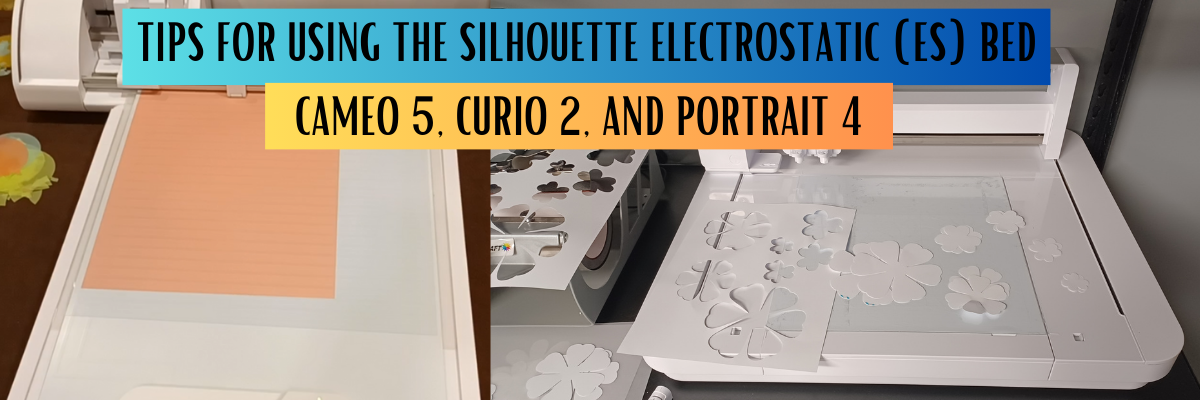
The new Silhouette Electrostatic (ES) Bed for the Silhouette Cameo 5, Curio 2, and Portrait 4 model machines was announced and demonstrated at the Silhouette Summit in September 2023. It was pretty cool to see this new technology in action.

Silhouette Cameo 5 Electrostatic Bed Tips

Affiliate links may be present in the following blog post and as an Amazon Associate, I earn from qualifying purchases.

I recorded the Electrostatic Bed demo from Silhouette Summit and shared it on the Silhouette Secrets+ YouTube channel HERE. I loved seeing everything first hand and in action at the Silhouette Summit!

But, until you get the equipment in hand and start to use it, you never really know how it’s going to go. This is new technology and it does have to be set up properly. It is designed to work with thin, smooth materials that can maintain a charge between the ES bed and the material while it’s being cut.

This was the first time in Silhouette’s history that they released the new machines and features at Silhouette Summit. Usually, in the past, there has been a 4-6 month gap between the announcement and when the new items are released.

The Silhouette Curio 2 was available first and it comes with the Electrostatic (ES) Bed in the box. For the Silhouette Cameo 5 and Portrait 4 models, the Electrostatic (ES) Bed is an additional accessory that can be purchased separately.

I received my Silhouette Curio 2 and immediately started testing and seeing what it could do. I have cut vellum, 65 lb. cardstock, 110 lb. cardstock, sticker paper, adhesive vinyl, and copy paper with the Electrostatic (ES) bed so far.

Check out the video – Tips for Success with the New Silhouette Electrostatic (ES) Bed – Cameo 5, Curio 2, and Portrait 4 HERE.

I share how you can be successful with the Electrostatic (ES) Bed. These tips will work for the Electrostatic (ES) Bed no matter which Silhouette machine model you are using it with. I’ve also included a few more tips down below this video in this post as well.

Electrostatic (ES) Bed Tips

  1. The Electrostatic (ES) Bed is powered by the Silhouette machine.
    This is one reason that the Electrostatic (ES) bed is not compatible with older model Silhouette machines. The older machines do not have the technology in them to send power to the ES bed.
  2. The electrostatic charge has to be built up.
    The ES bed needs to be turned on to start building up the charge. It takes time, usually less than a minute for the electrostatic charge to build. It is not a slap it and go. You have to set it up properly for success!
    Place Electrostatic (ES) Protective Sheet on the Bed and smooth out any air bubbles. Make sure that the Electrostatic (ES) Bed has not turned off.
    In early versions of the software with the Silhouette Curio 2, the ES Bed automatically turns off after the cut and the user will need to turn it back on each time.
  3. Not all materials work with the Electrostatic Bed.
    Materials need to be completely flat and smooth to be able to hold and maintain the electrostatic charge. Textured materials will not work or maintain that charge to hold it in place while it’s being cut.
    Smooth materials down on top of the ES Protective Sheet and allow time to build the charge.
  4. Test the materials with your fingertips to see if the materials move. If it moves, it’s not ready. Start again & take the time to build the charge.
    If the charge is broken at any time while it’s being cut, it will be a lost cut.
  5. Keep the design away from the edges of the materials.
    If the cut goes over the edge of the material, it can break the electrostatic charge and the material may move.
  6. Not all designs will work well with this new technology.
    Keep in mind that the smaller the cut pieces are, the less surface area there is for the material to maintain the electrostatic charge. Pieces that are completely cut may move out of place. This may or may not affect the entire cut. If a loose piece of material gets stuck on the blade as it’s cutting, it may hinder the cutting of the blade.
  7. Get extra materials! It is going to take time and practice to learn a new skill and new equipment.

Supplies used or mentioned in the video:

And I have more tips!!!!

Check out this video HERE to see how to install the Silhouette Electrostatic (ES) Bed on the Silhouette Cameo 5. The installation for the Silhouette Portrait 4 will be the same once the electrostatic bed is available.

I will admit, this is pretty cool technology and not having to remove delicate materials from the adhesive cutting mat is pretty darn awesome!

Will it work for every project? No!

But it is definitely fun to play around with and see what can be done with it!

Here are a few examples of projects I’ve done with the Silhouette Electrostatic (ES) Bed.

Silhouette Curio 2 Electrostatic Bed Tips

Koala sticker paper cut using the Silhouette Electrostatic bed. You can find the Silhouette Curio 2 Print and Cut with the ES (electrostatic) Bed HERE on the Silhouette Secrets+ YouTube channel.

Silhouette Curio 2 Electrostatic Bed Cutting Cardstock

Recollections 65 lb. cardstock 12″ x 12″ print and cut using the Electrostatic (ES) Bed. See this in action on this video Silhouette Curio 2 Print and Cut 12″ x 12″ with the ES Bed HERE.

Vellum Flowers cut with the Silhouette Curio 2 Electrostatic Bed

I cut & created these vellum paper flowers for the Silhouette Curio 2 – Out of the Box class where I share 3+ projects you can complete with the Curio 2 right out of the box. Find more details on that HERE.

Silhouette Tips for Cutting Small Fonts & Designs

This is an example of adhesive vinyl from a class I released called Easily Create Custom Gift Tags & Keepsake Ornaments in Silhouette found HERE. In the class I share a demonstration of cutting adhesive vinyl with the Curio 2 on the Electrostatic Bed.

I also released a tutorial on Silhouette Tips to Cutting Small Fonts and Designs found HERE that can be applied to any Silhouette model machine you are using.

Silhouette Curio 2 Electrostatic Bed cutting copy paper

And here is one that I just completed this week cutting copy paper using the new IPT technology to cut 2 sheets that are stacked on top of each other. Yes, you read that right! Stacked materials cut at the same time with the Electrostatic Bed.
I’ll be sharing more on that soon!

I’ll be adding more information to the blog and Silhouette Secrets+ YouTube channel as I create projects and play with this new technology. Stay tuned for more!

I hope those tips help you get started and creating with your new Silhouette model machines and the Electrostatic (ES) Bed.

Save this for future reference by pinning the image below.

Silhouette Electrostatic Bed Tips

Enjoy !

THANK YOU for your support! How can you help? Click HERE & buy a coffee.
Every little bit helps with the cost of running the site.

Silhouette Classes

Never stop learning! Let me help you take the anxiety out of learning with Silhouette and get to creating faster! My Silhouette classes are heavily focused on software, so you can take the skills & techniques taught and apply them to many future projects!

Silhouette step-by-step Classes by Silhouette Secrets+

Silhouette Secrets+ with EllyMae
**This post may contain affiliate links. What that means is that I may receive compensation if you purchase through the links I have provided. The price you pay for the product or service is not higher but I may get compensated for sharing.
Posted on 1 Comment

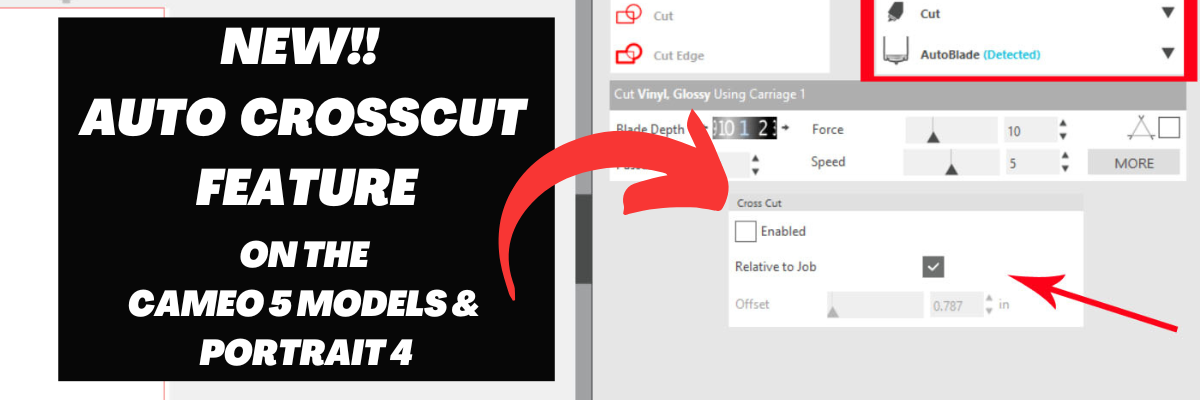
Silhouette Auto Crosscut Feature – Cameo 5 & Portrait 4

New!!! Auto Crosscut Feature

Check out the new video on the Silhouette Secrets+ YouTube channel HERE showing how to set up in the Silhouette Studio software for the auto crosscut and watch the machine in action and continue reading below for more information below the video link.

Affiliate links may be present in the following blog post and as an Amazon Associate, I earn from qualifying purchases.

The Silhouette Portrait 4 and Silhouette Cameo 5 models are now equipped to cut the vinyl off using the Autoblade after a cut has been completed for certain materials when set up properly.

The setup for the Auto Crosscut is very specific. It is for use with the Autoblade and when cutting off of a material roll such as adhesive vinyl or HTV.

Note: you should never cut completely through a material such as cardstock, etc. without the proper setup for pop-out cutting or when using the Auto Crosscut feature. Cutting through a material without the proper setup can damage your machine. The reason you can cut matless with adhesive vinyl, HTV, and kiss-cut sticker sheets is because you are only cutting through the top layer and not completely through.

On the Page Setup Panel – Tab 1, choose No Mat under #3 and set the custom media height size to the length of the roll you are cutting from on #4.

Silhouette Studio Software Auto Crosscut Setup

Click on the Send tab in the top right corner.

Silhouette Send Tab Auto Crosscut Setup

Then the following will need to be set up in order for this feature to show up:

  • Silhouette Portrait 4 turned on and recognized by the software
  • Silhouette Autoblade Type B recognized
  • Compatible material selected such as Vinyl – Glossy or Heat Transfer Vinyl

Once those things are completed, you will see a Cross Cut window show up below the cut settings on the Simple Tab where this feature can be enabled and adjusted.

Note: if a custom cut setting is used, the Crosscut option will show under the Cut Settings area when setup to cut without a mat.

After the cut is complete, the Silhouette Autoblade will adjust the blade depth for a complete cut through. The Crosscut action will be performed in several cuts so it can keep the material in place while it cuts through. Once complete, the cut vinyl can be pulled from the backside of the machine.

The Silhouette Portrait 4 is then set up for the next cut to be sent.

Silhouette Portrait 4

The Crosscut feature is performed in the channel that runs underneath the blade housing, so it does not damage the machine when it cuts completely through.

More Silhouette Portrait 4 resources:

Save this for future reference by pinning the image below.

Silhouette Auto Crosscut Pinterest

Enjoy !

THANK YOU for your support! How can you help? Click HERE & buy a coffee.
Every little bit helps with the cost of running the site.

Silhouette Classes

Never stop learning! Let me help you take the anxiety out of learning with Silhouette and get to creating faster! My Silhouette classes are heavily focused on software, so you can take the skills & techniques taught and apply them to many future projects!

Silhouette step-by-step Classes by Silhouette Secrets+

Silhouette Secrets+ by EllyMae
**This post may contain affiliate links. What that means is that I may receive compensation if you purchase through the links I have provided. The price you pay for the product or service is not higher but I may get compensated for sharing.
Posted on 1 Comment

Silhouette Portrait 4 Carry Tote & Storage Tips

Silhouette Portrait 4

The Silhouette Portrait is a great little machine, especially if you are looking to travel with a cutting machine. It’s light weight and very portable.

Affiliate links may be present in the following blog post and as an Amazon Associate, I earn from qualifying purchases.

I was asked about a storage tote for traveling with the Silhouette Portrait 4 machine and it took me a bit of time to order and find one that worked to fit not just the machine, but also supplies and keep them safe as well.

I share that in this new video on the Silhouette Secrets+ YouTube channel HERE.

Silhouette Portrait 4 Carry Tote

In the video, I show you how nicely everything fits inside, so make sure to check that out for tips.

I also have a Portrait 4 unboxing video HERE, if you are just getting started with your new machine.

Supplies mentioned in the video:

As I mention in both videos linked above, the Silhouette Portrait 4 cutting mat is a newly designed mat.

Silhouette Portrait Cutting Mat Comparison

The Silhouette Portrait 4 now has a cutting width of 8.5″, which is a change from the older model Silhouette Portrait machines. This does make a difference and the cutting mat looks different, it has a different size adhesive area, and the actual dimensions of the cutting mat are different than older Portrait cutting mats.

The photo below shows a comparison of the older cutting mat and the new Portrait 4 cutting mat. You can see the difference in the design area and the actual size of the cutting mat is different.

Silhouette Portrait Cutting Mat Comparison

This means that if you use an older model cutting mat in the new Silhouette Portrait 4, it will NOT line up with the on screen cutting mat that you see in the Silhouette Software.

This WILL affect your cut placement and print and cut projects!!!

Make sure when you are order additional cutting mats that you are ordering the correct one for your particular Silhouette Portrait model!

Find the Silhouette Portrait 4 cutting mats HERE. It will take time for retailers world wide to get these new cutting mats in stock and have availability.

Silhouette Portrait 4

Find more information on the Silhouette Portrait 4 HERE.

I hope these tips have helped and I can’t wait to see what everyone is creating with their Silhouette machines!

Save this for future reference by pinning the image below.

Silhouette Portrait 4 Pinterest

Enjoy !

THANK YOU for your support! How can you help? Click HERE & buy a coffee.
Every little bit helps with the cost of running the site.

Silhouette Classes

Never stop learning! Let me help you take the anxiety out of learning with Silhouette and get to creating faster! My Silhouette classes are heavily focused on software, so you can take the skills & techniques taught and apply them to many future projects!

Silhouette step-by-step Classes by Silhouette Secrets+

Silhouette Secrets+ by EllyMae
**This post may contain affiliate links. What that means is that I may receive compensation if you purchase through the links I have provided. The price you pay for the product or service is not higher but I may get compensated for sharing.
Posted on 2 Comments

Silhouette Portrait 4 Unboxing & Tips for Success

Silhouette Secrets+ by EllyMae

Silhouette Portrait 4

This lightweight and portable Silhouette Portrait 4 model cutting machine was announced at the Silhouette Summit in September 2023. It has many improvements over older Portrait model machines.

Affiliate links may be present in the following blog post and as an Amazon Associate, I earn from qualifying purchases.

I have released an unboxing & setup video on the Silhouette Secrets+ YouTube channel HERE but don’t stop there! I have a lot of additional information below on the new Silhouette Portrait 4 too!

Silhouette Portrait 4 Unboxing YouTube Video

Find Silhouette supplies at CrafterCuts or Silhouette America – links provided below
*user code SECRETS at CrafterCuts to save 10% on supplies (excludes new machines) & free shipping on orders over $35

Silhouette Portrait 4 Unboxing and Details

Silhouette Secrets+ with EllyMae

New Silhouette Portrait 4 features:

  • Easy Adjust Rollers – can adjust roller down for smaller widths
  • Adaptive Sensor – automatically adjusts the sensitivity of scanning sensor to properly scan materials for scanning on shiny or glossy surfaces
  • Electrostatic mat for use with Electrostatic Protection Sheet (coming in 2024)
  • Auto Crosscutter – on front of machine
  • Repeat Job button
  • 8.5″ cutting width
  • Powered housing
  • New Tools: Heat Pen Set
  • Emergency Stop to quickly stop a job without turning power off or disconnecting
  • Bluetooth
Silhouette Portrait 4

Compatible Tools for Portrait 4

What’s in the Box of the Silhouette Portrait 4?

Silhouette Portrait 4

*Note: there is not a USB cord in the Silhouette Portrait 4 – the user will need to provide one if wanting to connect by hardwire

Now, let’s take a closer look at the Silhouette Portrait 4 and those new features listed above.

Silhouette Portrait 4

The new Silhouette Portrait 4 has a newly designed roller bar like the new Silhouette Cameo 5 models. This new designed roller bar does not move.

The right roller can now be moved to multiple locations. To move, lift the lever on top of the right roller and slide it along the roller bar. Close your eyes and slide it and you will feel where it can be locked in place. I find this is the easiest way for a user to actually feel that roller settle in the locations it can be locked in place. Sometimes our eyes can deceive us to think it’s in the position but it’s not quite there.

If cutting a smaller width of material, slide the middle spring guides to the left and position evenly across the width of the material. These spring guides also look different than they did on previous models, but they are designed to help the materials not bubble up in between the rollers. They do NOT provide any actual pressure or downward force, but are there as guides.

The left roller is a stationary roller. Do not force it or you could break the machine.

Silhouette Portrait 4 Right Roller

Here is a closer look at the right roller on the Silhouette Portrait 4. The new design has the rollers behind the roller bar. I would highly recommend keeping the rollers clean and free of adhesive residue as they will be more difficult to clean. Adhesive residue or build up on the rollers can affect the mat and materials feeding properly, which will affect your cut quality as well.

With the new design of the machine and rollers, this also means that the rollers are NOT rolling on the material or the adhesive of the cutting mat! Wahoo! This was one of the things that I did not like on the older Portrait models. My first cut, it cemented my cardstock to the cutting mat because the rollers were on top of the material and the adhesive.

Silhouette Portrait 4 Buttons Explains

On the right side of the machine are the operational buttons to run the machine.

Repeat Job

Repeat job is back!!!! This was a highly requested feature and it’s back. I rarely used this before, but I did have to test it out and it worked great!

The middle buttons will move the housing location and the pause button in the middle. If you’ve ever tried to pause a cut with a Silhouette machine, you may have noticed that it is NOT automatic. This is because the data has already been sent to the machine and the machine has to complete the cut line that is in process or the data that it has already received before it can pause.

Emergency Stop

Want the job to stop immediately?

Press the power button on the side of the machine quickly and the machine will immediately stop the job. The job is lost and cannot be restarted, but it will immediately stop the cut.

With the implementation of the Emergency Stop, this means that the Power button also operates a bit differently than older models. You will need to hold the power button in for 3 seconds for the machine to turn on and off. This feature is available on the Silhouette Portrait 4, Cameo 5 models, and the Curio 2.

Blade Installation – do not skip this section!!!

One of the most important steps to setting up any Silhouette machine is proper blade installation. You would be amazed at how many users we troubleshoot weekly with that do not have the blade installed or locked in properly. Until that little thing is fixed, a user will have cut issues. It is not hard to install the Silhouette Autoblade, but it is the #1 cut issue we still see for all Silhouette machines.

Silhouette Portrait 4 Autoblade

  1. Pull the front lock out on the housing.
  2. Carefully slide the Silhouette Autoblade down in the housing. The window on the front of the blade should face forward.
  3. Push the Silhouette Autoblade down and carefully lift up on the front of the lock. This will help the blade settle down in the housing.
  4. There should be NO GAP between the lip of the blade and the housing.
  5. Push the front of the housing in to lock the blade in securely. The hooks on the front of the lock should grab the front of the Silhouette Autoblade.

This is the first thing to look at if you ever have cutting issues too! Most cutting issues can be fixed quickly if the user is willing to start at the beginning.

Blade Adjustment Hole

On the left side of the machine is where the blade adjustment hole is located.

Silhouette Portrait 4 Blade Adjustment Holes

This is not a new feature, but it’s worth mentioning. If debris is in that hole or the hole is blocked by the material or mat, then the Autoblade cannot adjust properly. This is something to be aware of and I hate to think how many Autoblades are in the garbage because a user was not aware of this.

If the Silhouette Autoblade is not hitting the hole properly, it will not adjust properly. I would recommend a blade housing reset.

Blade Housing Reset

  1. Check that the blade is installed and locked properly.
  2. Unplug the Silhouette machine.
  3. Then carefully move the blade housing all the way to the right and all the way to the left. Do this 3 more times.
  4. Leave the housing on the right side.
  5. Plug it back in.
  6. Turn the machine on and the housing will reset.
  7. Type out a capital B and send that as a test cut.
  8. Watch the red line inside the window on the front of the blade. Does the red line adjust to the correct number?

This usually corrects most cut issues, but will only work if the blade is installed properly first. Check out my Troubleshooting video HERE for more details & tips too!

Silhouette Portrait 4 Load Line

The Silhouette Portrait 4 has a new clearly marked load line for the cutting mat and materials. I know that does not sound exciting to most, but this is a major improvement in my opinion.

Silhouette Portrait 4 Load Line

The new load line now is clearly defined and has an arrow that points to it, just like the Silhouette Cameo models. If you have ever seen an older model Portrait, you will know that the load line was not designated at all. It was very confusing for users to know what line to use to load the mat next to.

NEW!!! 8.5″ Cutting Width on the Silhouette Portrait 4

The Silhouette Portrait 4 now has a cutting width of 8.5″ which is an improvement over older models that are only 8″ wide.

The cutting mat is a specific Silhouette Portrait 4 cutting mat that allows for the new 8.5″ width. Make sure when you are ordering additional cutting mats that you are getting the correct one for your machine model.

Silhouette Portrait 4 Cutting Mat

Find the Silhouette Portrait 4 cutting mats HERE. It will take time for retailers world wide to get these new cutting mats in stock and have availability.

This does make a difference and the cutting mat looks different. It also has a different size adhesive area and the actual dimensions of the cutting mat are different than older Portrait cutting mats.

Silhouette Portrait 4 Cutting Mat Comparison

The photo above shows a comparison of the older cutting mat and the new Portrait 4 cutting mat. You can see the difference in the design area and the actual size of the cutting mat is different.

This means that if you use an older model cutting mat in the new Portrait 4, it will NOT line up with the on screen cutting mat that you see in the Silhouette Software.

This WILL affect your cut placement and print and cut projects!!!

Powered Tool Housing

The Silhouette Portrait 4 now has a powered tool housing for use with the new Silhouette Heat Pen.

Silhouette Portrait 4 Powered Tool Housing and adapter

Included with the Silhouette Portrait 4 is a small power terminal shown in the photo above sitting in front of the machine. DO NOT LOSE THIS!!!!

You will not be able to use the Silhouette Heat Pen tools if you lose this little piece.

This little power terminal plugs into the top of the Portrait 4 tool housing and then the Silhouette Heat Pen can be installed in the housing.

This is a removable part so that the lid on the Silhouette Portrait 4 will close. Do not close the machine lid with the power terminal installed for best results. You do not want to damage this area or the power tools many not work properly.

For more information & setup steps for the Silhouette Heat Pen click HERE.

Silhouette Electrostatic Bed for the Portrait 4

Another new feature for the Silhouette Portrait 4 is the ability to connect to the new Silhouette Portrait Electrostatic Bed.

Silhouette Portrait 4 Electrostatic Bed

The Portrait 4 Electrostatic Bed has not arrived in the U.S. yet and is expected in 2024.

Silhouette Portrait 4 front Power Adapter for Electrostatic Bed

It will connect on the front of the Silhouette Portrait 4 when the cover is removed. Make sure to switch the unlock button on the bottom of the machine prior to trying to remove the cover on the front.

For more tips on success with the new Silhouette Electrostatic Bed, check out this video – Tips for Success with the new Silhouette Electrostatic (ES) Bed HERE.

New Auto Crosscut – on the front of the machine

The Silhouette Portrait 4 and Silhouette Cameo 5 models are now equipped to cut the vinyl off after a cut has been completed for certain materials when set up properly.

The setup for the Auto Crosscut is very specific. It is for use with the Autoblade and when cutting off of a material roll such as adhesive vinyl or HTV.

Note: you should never cut completely through a material such as cardstock, etc. without the proper setup for pop-out cutting or when using the Auto Crosscut feature or you can damage your machine. The reason you can cut matless with adhesive vinyl, HTV, and kiss-cut sticker sheets is because you are only cutting through the top layer and not completely through.

On the Page Setup Panel – Tab 1, choose No Mat under #3 and set the custom media height size to the length of the roll you are cutting from on #4.

Silhouette Portrait Setup

Click on the Send tab in the top right corner.

Silhouette Portrait Setup Send Tab

Then the following will need to be set up in order for this feature to show up:

  • Silhouette Portrait 4 turned on and recognized by the software
  • Silhouette Autoblade Type B recognized
  • Compatible material selected such as Vinyl – Glossy or Heat Transfer Vinyl

Once those things are completed, you will see a Cross Cut window show up below the cut settings on the Simple Tab where this feature can be enabled and adjusted.

Note: if a custom cut setting is used, the Crosscut option will show under the Cut Settings area when setup to cut without a mat.

After the cut is complete, the Silhouette Autoblade will adjust the blade depth for a complete cut through. The Crosscut action will be performed in several cuts so it can keep the material in place while it cuts through. Once complete, the cut vinyl can be pulled from the backside of the machine.

The Silhouette Portrait 4 is then set up for the next cut to be sent.

Silhouette Portrait Crosscut feature

The Crosscut feature is performed in the channel that runs underneath the blade housing, so it does not damage the machine when it cuts completely through.

That is a lot of information and new tips for the Silhouette Portrait 4.
I hope it helps you to be successful with your Silhouette machine!

More Silhouette Portrait 4 resources:

Save this for future reference by pinning the image below.

Silhouette Portrait 4 Unboxing & Setup Pinterest

Enjoy !

THANK YOU for your support! How can you help? Click HERE & buy a coffee.
Every little bit helps with the cost of running the site.

Silhouette Classes

Never stop learning! Let me help you take the anxiety out of learning with Silhouette and get to creating faster! My Silhouette classes are heavily focused on software, so you can take the skills & techniques taught and apply them to many future projects!

Silhouette step-by-step Classes by Silhouette Secrets+

Silhouette Secrets+ by EllyMae
**This post may contain affiliate links. What that means is that I may receive compensation if you purchase through the links I have provided. The price you pay for the product or service is not higher but I may get compensated for sharing.
Posted on Leave a comment

Handmade Keepsake Ornaments with Artesprix

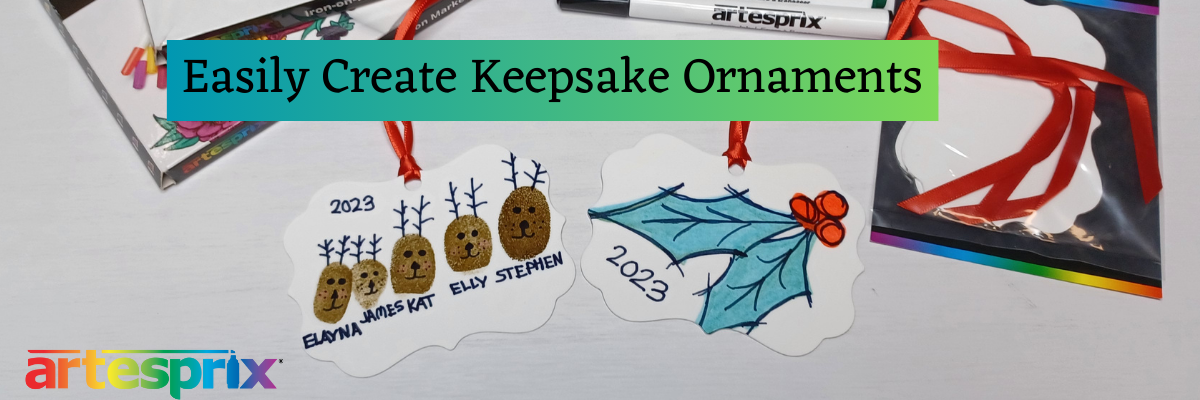
I have so much fun creating with the Artesprix sublimation products! This month I had a few helpers and that can always make things interesting. We had some good laughs as I enlisted their thumbs to make a Keepsake Ornament using the Artesprix sublimation supplies!

Affiliate links may be present in the following blog post and as an Amazon Associate I earn from qualifying purchases.

Artesprix Sublimation Ornament

I love how this turned out! The best part is – anyone can do it!
Yes! YOU!

Check out the video tutorial HERE on the Artesprix YouTube channel.

Artesprix Sublimation Supplies

Here is a list of the supplies I mentioned and demonstrated in the new YouTube video:

Artesprix Sublimation Supplies

I’ll be sharing more so make sure to follow Artesprix on social media to see more projects!
Artesprix YouTube channel
Artesprix Blog
Artesprix Facebook Page
Artesprix Iron-on-Ink Inspirational Group

Save this for future reference by pinning the image below.

Artesprix Sublimation Markers & Inks

Find more Artesprix inspiration HERE and grab some Artesprix sublimation products and get to creating today!

Enjoy !

THANK YOU for your support! How can you help? Click HERE & buy a coffee.
Every little bit helps with the cost of running the site.

Silhouette Classes

Never stop learning! Let me help you take the anxiety out of learning with Silhouette and get to creating faster! My Silhouette classes are heavily focused on software, so you can take the skills & techniques taught and apply them to many future projects!

Silhouette step-by-step Classes by Silhouette Secrets+

Silhouette Secrets+ by EllyMae
Silhouette Secrets+ with EllyMae
**This post may contain affiliate links. What that means is that I may receive compensation if you purchase through the links I have provided. The price you pay for the product or service is not higher but I may get compensated for sharing.
Posted on Leave a comment

New Silhouette Classes!!! Design with me in Silhouette Studio

Want to learn more in Silhouette Studio and start creating your own designs? I have 2 new classes on designing in the Silhouette Studio software available. on the Silhouette Secrets+ Teachable site.

Affiliate links may be present in the following blog post and as an Amazon Associate, I earn from qualifying purchases.

Easily Create a Custom Gift Tag & Keepsake Ornament in Silhouette Studio

Custom acrylic tags made in Silhouette

This class uses basic tools in the Silhouette Studio software to design custom tags that could be used for a wide variety of projects. While I demonstrate on a 3″ acrylic circle, once you know the tools used and put them together, you can use it for so much more! Shirts, tote bags, ornaments, wood rounds, and more!

And included with the class is a printable guide for tips to cutting small fonts and designs!

Check out the full class description and supply list HERE.

Easily Create Custom Gift Tags & Keepsake Ornaments in Silhouette Studio

*****

Designing in Silhouette Studio – Creating Keepsake Ornament Designs 2

Designing in Silhouette Studio Class

In this next class, we take it a step farther and move beyond just the basics and get into a little more creative designing. We start off with some basic shapes to see how the tools work and then by the end you have drawn your own holly berry wreath design completely from scratch! Yes! YOU!

Once you have the design steps down, you can easily use the skills to create other designs as well. Everyone has the power inside them! We just need to unlock that and that starts with learning how things work in Silhouette Studio.

Check out the full class description and supply list HERE

Designing in Silhouette Studio 2

*****

Let me help you get started with Silhouette faster and learn more! Find all of the current Silhouette classes available on the Silhouette Secrets+ Teachable site HERE.

Silhouette Secrets+ on Teachable

Save this for future reference by pinning the image below.

Silhouette Classes Pinterest

Enjoy !

THANK YOU for your support! How can you help? Click HERE & buy a coffee.
Every little bit helps with the cost of running the site.

Silhouette Secrets+ by EllyMae
**This post may contain affiliate links. What that means is that I may receive compensation if you purchase through the links I have provided. The price you pay for the product or service is not higher but I may get compensated for sharing.