This year I have taken a step back from many of the virtual events for several reasons, but I’m excited to announce that I am participating in the upcoming Scrapbook Fun Summit happening November 4-8, 2026.
Affiliate links may be present in the following blog post and as an Amazon Associate, I earn from qualifying purchases.
I am teaching a class on designing in Silhouette called Endless Options: Custom Titles with Cutting Machines.
In this class I am sharing how you can use cutting machine software to design and customize titles easily. Make your scrapbook titles stand out and fit your needs with a few tools in the software. Need a large title or a specific size to fit a small space on a layout? No problem! I will share how you can easily make it do what you want. This class will demonstrate 3 title options that can unlock creative ideas for many, many more!
In the Silhouette Studio software you will learn:
How to offset and manipulate text to create layered titles.
How to use software tools to change a design to fit your style.
Create multiple design options easily and mock up layout ideas before cutting.
I show step-by-step how I created different title options as well as creating the full layout in Silhouette. Here is a sneak peek at my mock-up and working file in Silhouette.
The best part about this is that no matter what type of Silhouette projects you make, this class can be applied to designing in Silhouette and other cutting machine software. Take the techniques taught and apply those to your real life designing and projects!
Now, that’s just my class. There are 30 more instructors at this event too!
I know those photos are tiny. Make sure to check out the details on the Scrapbook Fun Summit landing page and scroll down to see the class titles and larger project photos.
And remember, even if the instructor does not use the same machine or software as you, you may still get ideas, inspiration, and files that can be used with what you are using. I find there is usually always a little nugget of gold in each class I watch.
This is a free event but does require registration and you are able to watch the classes released each day for free for 24 hours. So make sure to register for the free ticket and watch on Thursday for my class.
There is also the option to purchase a VIP pass for extended access, so make to to review that offer as there is a short window for the cheapest price on that immediately following the free registration.
Thanks so much for using my links to register for events! That helps support my small business too!
I am excited to be participating at the Scrapbook Fun Summit and hope you’ll join us too!
I will also be LIVE with the Scrapbook Fun Summit team on Thursday, November 5, 2026 at 12 pm EST. Make sure to check out the links for the fun Summit events to join us.
Enjoy !
THANK YOU for your support! How can you help? Click HERE & buy a coffee. Every little bit helps with the cost of running the site.
Silhouette Classes
Never stop learning! Let me help you take the anxiety out of learning with Silhouette and get to creating faster! My Silhouette classes are heavily focused on software, so you can take the skills & techniques taught and apply them to many future projects!
**This post may contain affiliate links. What that means is that I may receive compensation if you purchase through the links I have provided. The price you pay for the product or service is not higher, but I may get compensated for sharing.
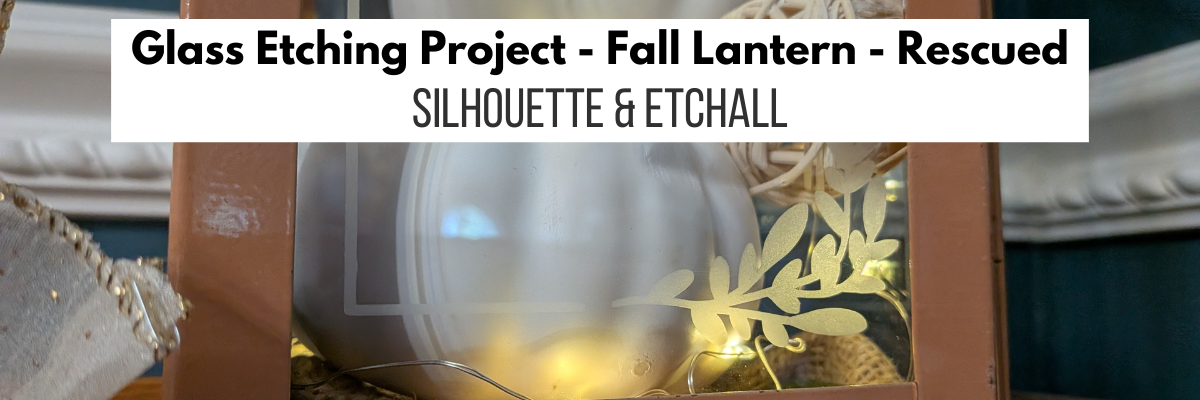
As I’ve mentioned in my past glass etching projects, I look for glass blanks whenever I’m out at a thrift store. Not only can you find great deals, save money on blanks, but can repurpose an item and give it new life too! I found this lantern at a thrift store and it was not perfect. But it was kismet because I knew just what I wanted to do with it.
Affiliate links may be present in the following blog post and as an Amazon Associate, I earn from qualifying purchases.
It was dirty – no problem. That can be cleaned up. It was pretty beat up – scratches in the paint, sticky residue on the panels, the handle, top and the, door were bent. But, it was the perfect blank for this project.
Now the only thing left to do was take the time to pull the entire project together. I am sharing the steps to glass etching, supplies, and my project process below.
This project was inspired by something I found on Pinterest, which turned out to be an AI image and not a real project that a human had created, until now. I used that creative inspiration and made my own real life Glass Etched Fall Lantern design.
Steps to Etched Glass Projects
Create a stencil for etching.
Clean glass blank with alcohol and allow to dry.
Apply stencil.
Mask off edge of stencil to prevent bleeding
Apply Etchall Etching Creme and allow to sit for 20 minutes.
Remove any excess Etching Creme and place back in the bottle.
Wipe off remaining excess with a paper towel and safely discard paper towel.
Run water in the sink and rinse off decal thoroughly.
Remove masking tape and adhesive vinyl under running water.
Gather the supplies for the glass etching project and protect your work space.
I started by measuring the panels. On this lantern, the panels are not the same size and the design needed to be adjusted to fit. I did modify this design a bit to make it work for this project.
Once I had all of the panel stencils designed to fit, then I grabbed some vinyl in a color I don’t use much of and cut each panel. I did do a test cut before cutting the entire stencil design.
I love being able to create my own stencils with a cutting machine and having the option that if I mess something up, such as put it on crooked, I can simply remove it and cut another stencil. My project is not lost and I don’t have to go buy more. I do use scrap vinyl whenever I can or colors that I don’t typically use on projects or have more of than others. The stencils do not have to match either.
I used transfer tape to apply the stencil onto the glass panels on the lantern. This particular lantern the panels were not removable and I worked on each panel separately. I tried to apply the stencil as straight as possible, however, as I mentioned, this lantern is a bit damaged, so not everything is perfectly aligned. And that is OK!
Glass etching is permanent and I like to ensure success, especially with detailed designs. So I used a little bit of heat with my heating tool. Be careful here and let the glass cool after this. Hot glass looks like cool glass.
I also add a layer of painter’s tape around the edges just in case any etching creme dribbles or runs. For this project, I felt it was very important given the edges of the glass panels and the damage making things crooked.
I then cover the entire stencil area where the design is with Etchall etching creme and wait 20 minutes.
When 20 minutes is up, I carefully scrap the Etchall etching creme off and put it back in the jar. Etchall etching creme can be reused and does not lose its potency. After the excess is scrapped off, I will carefully wipe the design with a paper towel before running water in the sink and rinsing off any remaining residue. At this step, you do want to be careful not to dislodge any pieces of the design. It never fails that when an oops happens and the creme touches an area you do not want to etch; it will etch in seconds.
Once the Etchall etching creme has been rinsed, removed the stencil and painter’s tape, and then carefully dry the glass container.
Here is a close up look at the top of the first panel etched.
I then repeated that process for the other 3 panels on the lantern. Do you have to do all 4 sides? No, but why not! For my project I wanted it to show from every angle.
After all the etching is done, then it was time to start working on the rest of the project. I love magnolias and made some a few years back that I have on display in my living room. And the best part was I had extra crepe paper already prepped for the double sided magnolia leaves.
I used the Magnolia Wreath file by Masion Gregoria and cut out a template from cardstock for the magnolia flowers. Then easily cut them by hand. I find this much faster than setting up my machine to cut as I can cut through multiple layers of crepe paper easily with scissors.
I took an alcohol ink marker and colored long rectangles of crepe paper for the stamin. Then used fine scissors and fringed it before rolling and gluing it for the centers.
And then I assembled the flowers and leaves. I ended up with 4 magnolia flowers.
This was one of those projects that I test to see what works and then decide if I liked it before gluing things into place. I placed a piece of burlap fabric in the bottom of the lantern, added a few drops of glue to hold it down, then added the white pumpkins and some other random decor items inside.
Hot glued the flowers to the outside, strung the fairy lights inside and around the outside edge. I hid the switch under the back flower. And added a gold wired ribbon bow on top. I love how it turned out. I think the lantern cost me $7 at the thrift store and it turned out amazing! The biggest investment on my end was the time to create it after I decided to stop dreaming and get to work.
Here is a close up look at the front top of the front panel.
And a close up look at the bottom of the front panel.
Another awesome project with Etchall Etching Creme!
Here is a look at the left side of the glass etched lantern showing the magnolia blooms.
A look at the back of the glass etched lantern. The little battery pack for the fairy lights fit perfect underneath the magnolia leaves and is easily accessible.
And a look at the right side of the glass etched lantern.
Glass etched projects are a great way to turn something plain into something unique. Or something that others might pass up on because it’s a bit damaged and repurpose it into an amazing decor piece.
I love using Etchall etching creme and have perfect etches each time! I’ve compared etching creme’s and it is the best. Glass can have its flaws, which can cause some imperfections in the etch, but those are few and far between with Etchall etching creme.
I’ve already picked up my next project piece at a craft thrift store a few weeks back and it’s calling my name to be customized.
Save this for future reference by pinning the image below.
Enjoy !
THANK YOU for your support! How can you help? Click HERE & buy a coffee. Every little bit helps with the cost of running the site.
Silhouette Classes
Never stop learning! Let me help you take the anxiety out of learning with Silhouette and get to creating faster! My Silhouette classes are heavily focused on software, so you can take the skills & techniques taught and apply them to many future projects!
**This post may contain affiliate links. What that means is that I may receive compensation if you purchase through the links I have provided. The price you pay for the product or service is not higher, but I may get compensated for sharing.
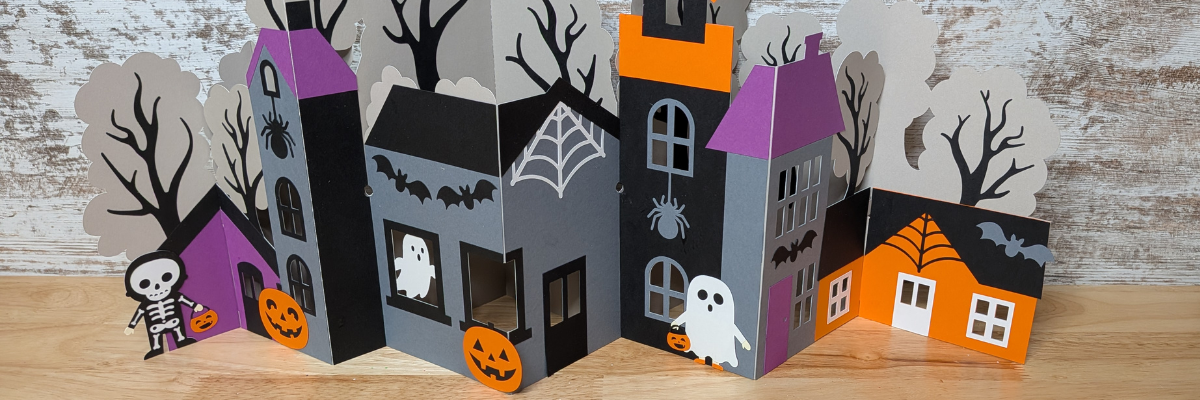
I love paper crafts! I started in the craft industry over 20 years ago with scrapbooking and I have always loved creating 3D paper craft projects. This XL Flat Fold Halloween Village is a large one, but not difficult to put together. I am sharing tips to working with the file and assembling it below.
Affiliate links may be present in the following blog post and as an Amazon Associate, I earn from qualifying purchases.
Here is a look at the file when opened from the Silhouette library. Files that sync to the Silhouette library directly from the Silhouette Design Store are .studio files.
Once the file is open, I would recommend immediately use File > Save As to create a new working file to move the pieces around.
One thing I noticed after I had all of the piece’s cut was that on the original file, the dark gray piece that the red arrow points to is in front of several of the other elements. It is not an issue but can catch you off guard when looking at the file for assembly.
Once the dark gray piece is moved, it will reveal the pieces underneath it. When assembling this make sure to glue the dark gray piece directly onto the lighter gray cardstock sections and then the black window frames go on top.
The sections in this file may need to be ungrouped to move the colors around for cutting. Each section may vary in how many times it needs to be ungrouped.
One other thing to note when ungrouping the sections is that the score lines will also ungroup from the file. Make sure to select the score lines and the larger section and group together so the lines move with it.
Not the end of the world if it is moved and you lose it. Grab a scoring board and score the lines yourself. They are pretty easy to find when you open the original file. This is exactly what I did because I wasn’t paying close enough attention when I moved several of the pieces to the mat to cut.
I ungrouped the sections and moved them around to cut. I keep uncut pieces on the left side of my virtual cutting mat then move them onto the mat by color and then cut all of one color first. Once the pieces are cut, I move them off to the right side. I’ll share a photo of my working design file at the end of this post.
Once all the pieces are cut for the Halloween village, start matching them up and dry fit them before securing anything with adhesive. Open the original file again and use it as your guide to fit all the pieces in.
I worked on one section at a time, except the black tree branches. I left all of those until the very end and they were the last pieces I adhered down. I dry fit each section before gluing down. Once all the sections were done, then I glued the tabs together to create the 2 long sections.
Here is a close up look at the details. My Silhouette Cameo 5 and Autoblade cut it perfectly and I didn’t have to recut any piece until I glued one windowpane in the wrong spot.
Rather than force my well used blade through the cardstock on the first pass. I chose to use 2 passes at the Cardstock Textured setting and it worked well.
I watched the video by Lori Whitlock for this design style to see how the 2 pieces fit together.
The XL Flat Fold Halloween Village Scene looks much more complicated to put together than it really is.
Now I mentioned I’d share my working file. It’s a mess, but it is a system that I find works well. Normally I don’t have the pieces overlap each other after they are moved to the right side after being cut, however, this is a large file, so they are overlapping today.
And there are more of these files by Lori Whitlock too!
Save this for future reference by pinning the image below.
Enjoy !
THANK YOU for your support! How can you help? Click HERE & buy a coffee. Every little bit helps with the cost of running the site.
Silhouette Classes
Never stop learning! Let me help you take the anxiety out of learning with Silhouette and get to creating faster! My Silhouette classes are heavily focused on software, so you can take the skills & techniques taught and apply them to many future projects!
**This post may contain affiliate links. What that means is that I may receive compensation if you purchase through the links I have provided. The price you pay for the product or service is not higher, but I may get compensated for sharing.
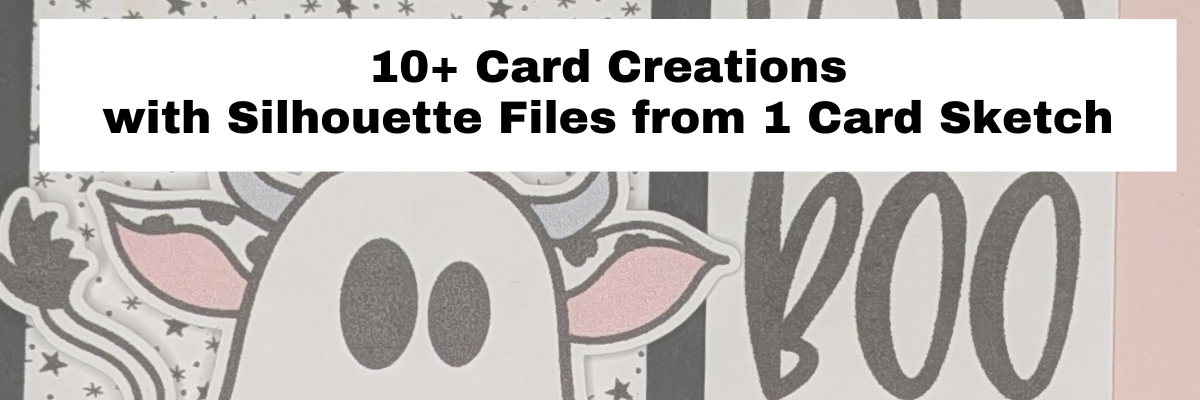
One card started it all and I ended up spending the afternoon designing with files from my Silhouette library to create 10 more cards. Find all the details below for the general card making supplies I used and the Silhouette files for each card creation. I made Halloween themed cards, but you could use this same sketch idea from Meg Davies eBook – Card Sketches with a Twist to create cards for all kinds of occasions.
Affiliate links may be present in the following blog post and as an Amazon Associate, I earn from qualifying purchases.
I used Sketch #1 from the eBook and created all of these cards based off of that sketch idea. Two things sparked my creative ideas. First, in the eBook, Meg shares 4 real-life card creations for each sketch in the book, along with the supply list and dimensions. Card sketches are a great starting point. Find the eBook HERE.
Second, I created 1 card and then while looking in my Silhouette library for the files I wanted for the first card, I kept seeing more designs that I wanted to use. So I did just that!
Here is a look at the first card that started it all.
Happy Halloween Ghost – Card #1
Halloween Background – Printable Word Art by Traci Vanover – Design #446324 (no longer available)
After creating the first card, I recorded a video sharing how I turned the card sketch into a cut file and then designed the cards in Silhouette Studio. Watch the video below
For most of these cards, I set up the backgrounds with 4 to a page and printed, then used a paper trimmer to cut since it was straight edges and I could fit more on the page without the registration marks. A few snips with the paper trimmer and the backgrounds were cut.
I set up the sentiments and graphic elements with print and cut and fit as many as I could on a page.
If I am creating multiples of the same card, I would copy and paste and fit as much as I could of the elements on the print and cut page. I was creating different designs for each card, so I arranged all the elements and fit as much as I could on each page. I did save each print and cut page as a separate file, so I have the files to go back to and use again or if something would have happened and the cut was off, I could reprint and repeat.
All the images cut perfectly and I didn’t have to repeat any of these designs. I do follow the same steps every single time for print and cut and stick to the defaults and basics. If I do alter things away from the defaults, I tell myself that if it doesn’t work, then it’s my own fault. Check out this print and cut blog post for tips and Successful Print and Cut Projects – Back to Basics.
Happy Halloween Frog & Cat – Card #2
For this card, I inked the edges of the background paper with orange and then used a distressing tool on the edges of the torn paper rectangles of purple and green. I used foam tape to pop up the frog and cat with the pumpkin graphic and the matted sentiment.
On this card I inked the edges of the background paper with black ink and used foam tape on the bat to pop it up on the card. The green piece of cardstock was cut with a paper trimmer from a scrap.
For this card, I use the Bibbity Bobbity Boo Silhouette file and assembled it in the software and set it on a green background to print and cut. I used the Cut Edge on the Send tab to cut only the outside of the rectangle. The witch and moon are cut from colored cardstock scraps. And the background pattern is inked with black ink.
This card the entire background is set up as a print. The Boo-tiful design and border was placed on a white background. I duplicated the border design, then released the compound path to leave the window pieces and filled those with yellow and placed them over top of the open windows to give it the appearance of the lights showing through.
For this card background, I used the knife tool to cut the rectangle apart, then added the torn edge border to cut edges. Once it was lined up and the same size as the background rectangle, I selected both and welded together, then filled it with the background pattern for printing. Since this one had a specific cut pattern on one side, I did set up the design to print and cut along with the book spider. The Happy Halloween design is printed directly onto the background of the card front.
I used print and cut elements from the 3D Chipboard Village Halloween Silhouette file and added an offset then filled it with white and set it up for a print and cut. The sentiment has an offset behind it that is filled with white and set up as a print and cut. I also printed the washi tape Silhouette files and then layered those on the card front. The background paper is inked with black ink. And the black squares were cut from scraps of black cardstock.
For this card, the cow is set up as a print and cut along with the sentiment was added to a white rectangle background and then printed. Black and pink cardstock rectangles were cut to layer underneath the sentiment and foam tape was used under the cow design.
I added an offset around the ghost and then cut that from an orange piece of cardstock. The sentiment is set up on a white rectangle and print and cut, then layered on top of a purple cardstock rectangle. The green cardstock was cut with a paper trimmer. I added black ink around the edges of the background paper. I used foam tape underneath both the ghost and the sentiment.
For this card, I set up the ephemera pieces as a print and cut along with the Happy Halloween sentiment. Then layered the designs together and used foam tape on the bottle and skull. The red piece of cardstock is a scrap, and I tore the edge by hand. I used an Old Paper Distressed Ink on the background paper.
For this card, I layered the Halloween word art on top of the alcohol ink background and changed the word art color to match one of the colors picked up from the background with the eyedropper tool. Then set it up for printing. I added the additional word art on top of a torn edge rectangle and then print and cut the Silhouette file. The orange rectangle is cut from a scrap. I inked the background with orange ink and used foam tape under the cat and bat Silhouette files.
It was difficult to stop with these designs, and I have a few more in the creation process but had to tell myself this was enough for one blog post. I hope you’ll open the Silhouette software and look through your library and see what you can put together for a future project.
Save this for future reference by pinning the image below.
Enjoy !
THANK YOU for your support! How can you help? Click HERE & buy a coffee. Every little bit helps with the cost of running the site.
Silhouette Classes
Never stop learning! Let me help you take the anxiety out of learning with Silhouette and get to creating faster! My Silhouette classes are heavily focused on software, so you can take the skills & techniques taught and apply them to many future projects!
**This post may contain affiliate links. What that means is that I may receive compensation if you purchase through the links I have provided. The price you pay for the product or service is not higher, but I may get compensated for sharing.
Have you ever used a card sketch or a scrapbook layout? Whether it’s an idea you drew out on paper before creating or you used someone else’s for inspiration, it can be a great way to start. Years ago when I started scrapbooking, we called this scraplifting and there are sites that specialize in just that. One of those that I’ve used many times in the past is called PageMaps. But there are many others, such as Meg Davies with I Teach Stamping who is the October 2026 collaborating artist for the Silhouette Secrets+ newsletter.
Affiliate links may be present in the following blog post and as an Amazon Associate, I earn from qualifying purchases.
Meg has provided one of her card sketches for the October newsletter from her eBook – Card Sketches with a Twist. This eBook not only gives you a sketch idea, but it also provides 4 real-life applications including the supply list and dimensions that Meg used to create the cards for each of the sketch ideas.
For the first week of Crafting Creativity projects for October, I created a card design using supplies from my Silhouette library and then cut all the elements and assembled it.
One of my goals lately has been to use more of my Silhouette library files. I have collected so many throughout the years and I am trying to use more of those files instead of just collecting them. Using the card sketch was the perfect way to create with what I already have in Silhouette.
I shared how to take the card sketch and make a cut file from the idea and then showed how to put that into a real life projects right in Silhouette Studio in this video below. After watching the video, make sure to check out additional information below the video.
In the video I also shared creating a 2nd card and here is a look at the card created with that digital idea.
Supplies for Card Creations from a Card Sketch Demo
Once I started creating with the digital supplies in my Silhouette library, I couldn’t stop and I created 10 more cards starting with this card sketch idea. Stay tuned for more details (I’ll link the blog post when it goes live), but here is a sneak peek.
Start thinking about some of the Silhouette files that you’ve collected through the years and start putting those to use. While the cards I created are Halloween themed, you can used this card sketch idea for cards or other projects all year long. I’ll be sharing more with newsletter subscribers and then put it all together in a future Crafting Creativity blog post.
Save this for future reference by pinning the image below.
Enjoy !
THANK YOU for your support! How can you help? Click HERE & buy a coffee. Every little bit helps with the cost of running the site.
Silhouette Classes
Never stop learning! Let me help you take the anxiety out of learning with Silhouette and get to creating faster! My Silhouette classes are heavily focused on software, so you can take the skills & techniques taught and apply them to many future projects!
**This post may contain affiliate links. What that means is that I may receive compensation if you purchase through the links I have provided. The price you pay for the product or service is not higher, but I may get compensated for sharing.
I absolutely love papercrafting — and this project reminded me just how much! While creating this DIY 3D Halloween Graveyard Busted Canvas with Silhouette, I honestly thought, maybe I should give up everything else and just be a paper craft artist! That’s how much fun this was to make. Using designs by Paper Beats Dynamite, I built a spooky graveyard scene complete with a 3D tombstone and a skeleton coffin. The dimensional layers, textures, and eerie details came together perfectly, making this one of my favorite Halloween projects yet.
Affiliate links may be present in the following blog post and as an Amazon Associate, I earn from qualifying purchases.
Last year I created several busted canvas projects and it has been on my mind ever since. I had a 16″ x 20″ black canvas that had a hole in it and I’ve kept it around for the perfect project. When I started creating a class for the 2025 Scrapbook Fun Summit and thought I’d share the technique for a card, this Halloween themed canvas started taking form in my head too.
I started by gathering some supplies in the Halloween decor isles. This was one of those projects that was not a set plan and came together as I went along. I wasn’t sure exactly on what I wanted to use, so I just grabbed things that I thought might work.
Supplies Used for the Halloween Graveyard Busted Canvas:
I took a lot of photos along the way of the entire process, I’ll share a few below, but make sure to check out the video where I share more on the creative process!
Creative Process – Halloween Busted Canvas with Silhouette
Here is a look at the front pattern I used for this busted canvas. It is a large canvas design so I had to piece 3 sheets of paper together to cover it. Since it will be cut up, it won’t be as noticeable that the pattern is not continuous. Of course, during the project creation my supervisor, Goldy, had to be right there helping too.
Once the glue was dry, I could add the pattern paper to the backside of the canvas and when everything was good and dry, then I could cut the busted canvas design and start to curl the edges back. I have found after making several of these that if you “train” the curls back and let them rest, they will stay better than if you try to immediately glue them down.
Next up was to secure the plastic chains to the back of the canvas before adding the background layer.
Before proceeding, I had to test it to make sure that the skeleton would be able to sit in the frame.
For this project, I actually made up 3 different backgrounds until I found the one that I settled on, so you will see that the final background is different from the beginning to the final results.
And then came the construction of the elements to add onto the front of the canvas. I started with the Skeleton Coffin by Paper Beats Dynamite. At the time of this project, I was testing the brand new Silhouette Cameo 5 alpha and was impressed with how the cuts came out with this detailed design.
I do not recommend starting with such a detailed, intricate design when testing a new machine model, especially for a beginner. This was quite a test for a new out of the box machine and while it turned out well, that may not always be the results.
I followed the instructions from the designer for assembly and it turned out AMAZING! Yes, there was a happy dance and a bit of gloating that happened. And let me tell you, YOU SHOULD! If you create an amazing project that you love, cheer for yourself!
Here is a close up at the top of the coffin that shows all the details
And the bottom of the coffin – look at those details! I doubted myself and didn’t think it would turn out like the designer’s original design. I’m so glad I was wrong. I followed the instructions and it turned out fantastic.
I do have years of paper crafting experience, however, I do believe that any Silhouette user can create this with a bit of practice, following the instructions, and the time to invest in creating it. The biggest factor into projects like this is TIME. It takes time for all of it to come together from the cutting, assembly, and dry time.
This element was ready and then on to the next piece.
Next up was a 3D Tombstone by Paper Beats Dynamite. I did not take many photos of the cutting process, but here’s a look after I started folding the pieces for assembly.
I again followed the instructions provided by the designer to assemble and paint the tombstone.
The hardest part about these projects was waiting for things to dry before I could move on to the next step. I often get involved in multiple projects at once because I’m waiting for things to dry on one and I can’t just sit idle.
Once everything was dry, it was time to put it all together.
My husband mentioned that the skeleton was too clean, so I had to dirty it up a bit with some Distress spray.
Here is the first final test hanging on the wall.
After letting it sit a bit, we decided that the background was too similar to the front. Back to the studio I went to make a new background. I definitely like the spooky graveyard background for the final-final result even better than the first option.
Here are a couple close ups of the 3D skeleton coffin and tombstone in place on the canvas.
I added in some skulls, bones, and fabrics to add more texture and elements to the entire piece.
I had so much fun creating this piece of art that will be displayed year after year. The entire process took several weeks to complete but was so worth the end result.
Do you create 3D designs? It’s one of my favorite things to do and I really should make more time for it.
Save this for future reference by pinning the image below.
Enjoy !
THANK YOU for your support! How can you help? Click HERE & buy a coffee. Every little bit helps with the cost of running the site.
Silhouette Classes
Never stop learning! Let me help you take the anxiety out of learning with Silhouette and get to creating faster! My Silhouette classes are heavily focused on software, so you can take the skills & techniques taught and apply them to many future projects!
**This post may contain affiliate links. What that means is that I may receive compensation if you purchase through the links I have provided. The price you pay for the product or service is not higher but I may get compensated for sharing.
These cards turned out fantastic and I just have to share how I created the Fall cards with my Silhouette and supplies from Pointer USA.
Sometimes I get the opportunity to work with a company or product and my goal is to find ways to use that with my Silhouette or with a Silhouette project. That is after all the main focus of Silhouette Secrets+ right!
I am a Creative Professional with NAMTA and Pointer USA reached out to me before the 2026 Creativation to see if I’d like to test some of their products. I will fully admit I wasn’t sure what the quality would be when I first looked at the site, but once I started using the products I had no doubts. I have since purchased more myself because I am using the products in my projects. Not only are they a good quality craft supply, but they are also economical too, which I know that most of those reading are also looking for. No matter what supplies you use, I hope you get some ideas from this blog post for your future projects
Full disclosure: I have received products from Pointer USA for testing and was paid for the Instagram reel created (Sept 2026). My opinions are my own and I was not paid to promote with this blog post. Affiliate links may be present in the following blog post and as an Amazon Associate, I earn from qualifying purchases.
First, I want to share the Instagram reel that I created that shows the process. Of course, reels are designed for short form & it takes longer than 50 seconds to complete the project, so it is a very quick glimpse at my process. I’ll share a few more details, a supply list, and screenshots of my design in Silhouette Studio below the reel, so make sure to scroll farther down.
I started first with the watercolor background. This takes no skill at all and anyone can do this smoosh technique. I love how it gives a different pattern and unique look each time.
I started with my lightest color first. I added a bit of yellow watercolor paint on top of my Glassboard mat and then added water with a water brush from the watercolor travel kit.
Then I laid down the mixed media paper over top to pick up the color. I repeated that to fill the entire page. And repeated the same process with the orange and red watercolors. Have fun with this and create some awesome background images. Don’t focus on what the entire page looks like. It should be random, especially for this project since you will only see a glimpse of the background through the leaf cutouts of the card front.
I chose to use the Art PRO watercolor tubes of paint for this project and it turned out fantastic and bright.
While that dried I headed to the Silhouette Studio software to create my card design. I used a combination of sketching and cutting with the Silhouette to make the card fronts and designed everything in Silhouette so I knew exactly how it would look.
Here is a look at the card design in Silhouette Studio all put together. I love to be able to mock-up a design before I start cutting so I can see how it will all fit together.
The white and the yellow layers have the leaves cut out so it will show through the red layer which is going to be the watercolor background.
Here is a look at the layers of this card design separated out in Silhouette Studio.
The fall sentiment will be sent to sketch out on the front of the card and then without unloading the mat, the leaves will be cut from the card front. From one sheet of letter size paper, I could get 4 card fronts and I took it a step farther by swapping out the pen for each one. This took a little bit more time to complete, but I wanted to show how the colors would look and mix it up.
Since I was sending the designs to sketch and then cut, I used the Cut by line feature to be able to send each action separately. This was extremely helpful to be able to send only one card to sketch at a time and swap out the pen colors in between. More details on using the Cut/Sketch by Line Color in Silhouette HERE.
Look at that background showing through! It turned out even better than I thought it would. Each card is completely different and I don’t know which one is my favorite.
I love playing with paper and seeing what is possible. I hope this has sparked some ideas for crafty projects in your future.
Save this for future reference by pinning the image below.
Enjoy !
THANK YOU for your support! How can you help? Click HERE & buy a coffee. Every little bit helps with the cost of running the site.
Silhouette Classes
Never stop learning! Let me help you take the anxiety out of learning with Silhouette and get to creating faster! My Silhouette classes are heavily focused on software, so you can take the skills & techniques taught and apply them to many future projects!
**This post may contain affiliate links. What that means is that I may receive compensation if you purchase through the links I have provided. The price you pay for the product or service is not higher, but I may get compensated for sharing.
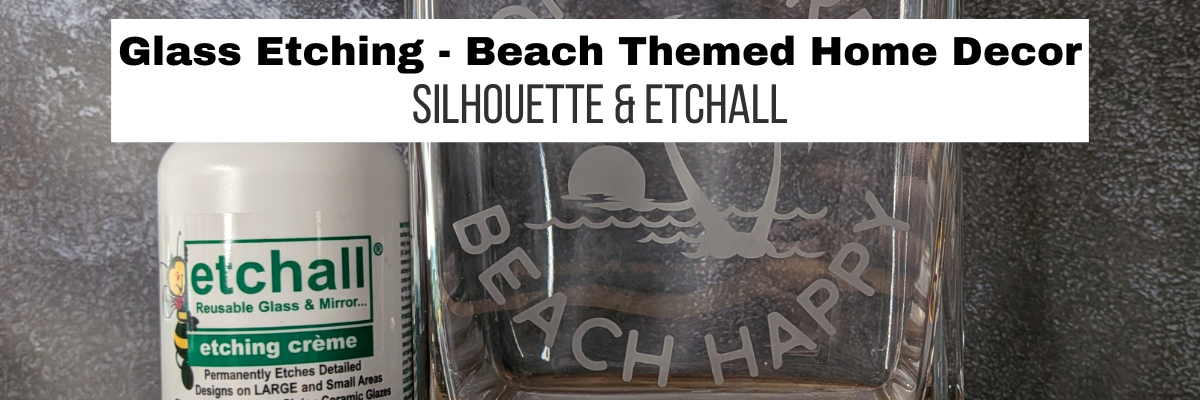
I love glass etching and being able to take something plain and make it stand out. I am always on the hunt for glassware at thrift stores and I’ve found some really good things. Thrifting is a great way to make amazing projects and keep on budget too. And Etchall etching creme never disappoints! It is so worth it, and a bottle lasts me a long time and more projects than I can count.
Affiliate links may be present in the following blog post and as an Amazon Associate, I earn from qualifying purchases.
Here is a recent find from the thrift store and I love how it turned out. Now, full confession, it takes me a long time to find a design I like and settle on. I’ll share a glimpse of that farther in the blog post.
Steps to Etched Glass Projects
Create a stencil for etching.
Clean glass blank with alcohol and allow to dry.
Apply stencil.
Mask off edge of stencil to prevent bleeding
Apply Etchall Etching Creme and allow to sit for 20 minutes.
Remove any excess Etching Creme and place back in the bottle.
Wipe off remaining excess with a paper towel and safely discard paper towel.
Run water in the sink and rinse off decal thoroughly.
Remove masking tape and adhesive vinyl under running water.
Gather the supplies. I use scraps whenever I can. As you’ll see through the photos my adhesive vinyl color changes. I grabbed a scrap of adhesive vinyl and unfortunately, it was bad. It cut fine, but when I went to weed it, I knew there was an issue because it was not easy to weed. And in my true stubborn fashion, I worked hard and weeded the entire thing and then it wouldn’t stick to the glass. I know better. And I still continue to punish myself and try to salvage it. I’m sure there is at least one other person reading this that understands.
A couple signs that adhesive vinyl has gone bad is that with a good cut it’s still hard to weed and the backing separates from itself. This generally appears that the backing sticks to the adhesive vinyl and is difficult to weed. This can also happen when the cut is too deep, but as you get more and more experience you will start to recognize old vinyl versus a bad cut.
I measure the blank and create the shape the same size in the Silhouette software using the Drawing Tools. Then it is time to find the design for your project. This takes me the longest time. I will go through so many options, but I don’t delete them, I just move them off to the side and keep on creating.
Glass etching is permanent and I like to ensure success, so I like to hit it with a little bit of heat. But, be careful and let the glass cool after this. Hot glass looks like cool glass. This step can help with little bits being held in place better. It can also help smooth out any areas that may have had allowed etching creme to seep underneath. I also add a layer of painter’s tape around the edges just in case any etching creme dribbles or runs. This has saved me so many times.
I then cover the entire stencil area where the design is with Etchall etching creme and wait 20 minutes.
When 20 minutes is up, I carefully scrap the Etchall etching creme off and put it back in the jar. Etchall etching creme can be reused and doesn’t lose its potency. After the excess is scrapped off, I will carefully wipe the design with a paper towel before running water in the sink and rinsing off any remaining residue. At this step, you do want to be careful not to dislodge any pieces of the design. It never fails that when an oops happens and the creme touches an area you do not want to etch; it will etch in seconds.
Once the Etchall etching creme has been rinsed, removed the stencil and painter’s tape, and then carefully dry the glass container. I love using Etchall etching creme and have perfect etches each time! I’ve compared etching creme’s and it is the best. Glass can have its flaws, which can cause some imperfections in the etch, but those are few and far between with Etchall etching creme.
I love it! That sounds like a broken record, but it’s true when I etch with Etchall etching creme. Now the only thing left to do is find the perfect thing to fill this glass etched decor vase with. I tried some shells and sea glass, but just wasn’t happy with how it looked, so I am still on the hunt for the perfect fit to this gorgeous piece.
Give it a try! But I’ll warn you, it might be addicting and then you’ll be on the hunt for more glassware to etch and more projects get added to your to do list.
Save this for future reference by pinning the image below.
Enjoy !
THANK YOU for your support! How can you help? Click HERE & buy a coffee. Every little bit helps with the cost of running the site.
Silhouette Classes
Never stop learning! Let me help you take the anxiety out of learning with Silhouette and get to creating faster! My Silhouette classes are heavily focused on software, so you can take the skills & techniques taught and apply them to many future projects!
**This post may contain affiliate links. What that means is that I may receive compensation if you purchase through the links I have provided. The price you pay for the product or service is not higher, but I may get compensated for sharing.
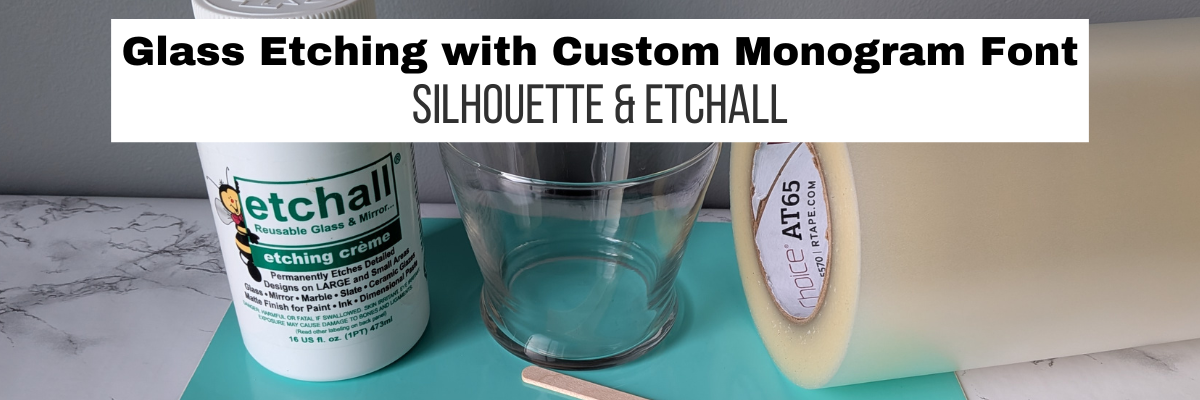
I love being able to create custom gifts for friends, family, and for events I attend. When I was brainstorming the 5th project for the month of July’s weekly newsletter I had several options. The one that beat out the other ideas was because it can be used as a gift for a family friend for the holidays. The winner? A custom etched monogram on a glass container with Etchall etching creme. This could be used for a candy dish, candle holder, home decor, or many other things. I’ll leave that up to the recipient to decide what to do with it.
Affiliate links may be present in the following blog post and as an Amazon Associate, I earn from qualifying purchases.
Steps to Etched Glass Projects
Create a stencil for etching.
Clean glass blank with alcohol and allow to dry.
Apply stencil.
Mask off edge of stencil to prevent bleeding
Apply Etchall Etching Creme and allow to sit for 20 minutes.
Remove any excess Etching Creme and place back in the bottle.
Wipe off remaining excess with a paper towel and safely discard paper towel.
Run water in the sink and rinse off decal thoroughly.
Remove masking tape and adhesive vinyl under running water.
Gather the supplies. I started by grabbing a sheet of Oracal 651 adhesive vinyl in a color that I don’t really use often, however, I ended up using a scrap from my scrap pile because the design fit on it and I have a drawer full of scraps.
Enlist a helper, whether you really want their help or not. Supervisor Goldy decided she was going to test out the tools and if I turned my back she would have taste tested the adhesive vinyl and transfer tape too!
Measure the blank and create the design to cut for the stencil. For this project it does have a bit of a conical shape to the widest part of the vase, so I used the Conical Warp tool with the etched monogram design to help with that. I shared this technique in the March 2026 Crafting Community member exclusive tutorial when making etched martini glasses. See more on the etched martini glasses HERE.
Then I grabbed a scrap of adhesive vinyl and cut it with the Silhouette Cameo. Any Silhouette model machine can cut adhesive vinyl for stencils.
Glass etching is permanent. So I do like to add a little bit of heat to the glass etching stencil when it has fine details. I do this carefully so not to burn myself and then let the glass and stencil cool completely. This step can help the adhesive vinyl adhere a bit better and smooth out any areas that may have had allowed etching creme to seep underneath. And then I add a layer of painter’s tape around the edges just in case any etching creme dribbles or runs.
While you could cut a larger piece of adhesive vinyl with the stencil to avoid using the painter’s tape, then you run the risk of more wrinkles and the stencil not adhering completely flat on a curved surface.
I then cover the entire stencil area where the design is with Etchall etching creme and wait 20 minutes.
When 20 minutes is up, I carefully scrap the Etchall etching creme off and put it back in the jar. It can be reused. Then I will carefully wipe the design with a paper towel before running water in the sink and rinsing off any remaining creme. At this step, you do want to be careful not to dislodge any pieces of the design. It never fails that when an oops happens and the creme touches an area you do not want to etch, it will happen in seconds.
Once the Etchall etching creme has been rinsed, removed the stencil and painter’s tape, and then carefully dry the glass container. Then admire the custom glass etched monogram project.
I love how this turned out! A perfect gift idea with a custom etched monogram. And it was a very economical project to complete too! Glass jar from the Dollar Tree (which isn’t a dollar anymore, but still reasonable) and reusable Etchall etching creme that can make many, many more projects!
Save this for future reference by pinning the image below.
Enjoy !
THANK YOU for your support! How can you help? Click HERE & buy a coffee. Every little bit helps with the cost of running the site.
Silhouette Classes
Never stop learning! Let me help you take the anxiety out of learning with Silhouette and get to creating faster! My Silhouette classes are heavily focused on software, so you can take the skills & techniques taught and apply them to many future projects!
**This post may contain affiliate links. What that means is that I may receive compensation if you purchase through the links I have provided. The price you pay for the product or service is not higher, but I may get compensated for sharing.
When we were told as Creative Professionals with NAMTA that we would have the opportunity to display our artwork at the 2026 Creativation event, my brain immediately started thinking of ideas and I started a list in my phone. We were allowed to have 2 – 12″ x 12″ canvases on display in the entrance hall for the conference and were given a theme of red, white, and blue. This was an opportunity to display our art and share our skills. I love building things, so a 3D mixed media design was a no brainer for me. This was one of those projects that I started with a few basic ideas and built the project as I went. Sometimes that’s just how it goes. Some things might work together along the way and some things might not.
I love building 3D projects! There is just something about taking flat materials and molding them into a final 3D project. Having a cutting machine like a Silhouette or Siser Juliet or Romeo opens up a lot of possibilities to cut designs for 3D creations. The biggest factor that goes into it all is – TIME! It takes time to design, build, and modify things as you go along in the process.
Affiliate links may be present in the following blog post and as an Amazon Associate, I earn from qualifying purchases.
In this blog post, I’m sharing a look at the behind the scenes of creating this 3D Mixed Media Canvas: Time to Sparkle with a few still photos & the supply list. Check out the video at the end of the blog post for additional shots of the process as well.
First, here is a look at the finished project.
I started by gathering some supplies to get started. I had to order new inks to print the background papers. These 3 are designs by Clikchic Designs and can be found in the supply list below. I am able to print borderless with the Canon TS9521C printer. I ordered Oracal 851 glitter adhesive vinyl in red, white, and blue from Vinyl Spectrum. The entire theme of this canvas is to sparkle, so I embraced that fully.
I first started by cutting down the background paper for the backside of the canvas to fit within the frame. Then added layer of Mod Podge to the canvas and to the backside of the blue patterned paper. Smooth that down as much as possible. Adding the Mod Podge to both the canvas and the back of the paper helps it to adhere smoothly. Once it’s down flat, then I added another layer of Mod Podge Sparkle on the front of the blue paper. Let this dry completely.
While that was drying I set up the design for cutting from Oracal 851 Glitter Adhesive Vinyl in Silhouette Studio.
Then I cut each color of glitter adhesive vinyl. For each layer, I cut the color and the green rectangles. The green rectangles are designed as layering marks that are used to line up the layers exactly. While it might use a little more material when using these marks, I find I get a much more accurate layering. This is one of those techniques that no matter how you do it, practice makes it better.
While this design is not technically layered, the colors are in a specific location to each other, so I used the same technique with the layering marks and it worked out great!
Then I carefully applied the adhesive vinyl to the front of the patterned paper. This will be the background that shows through on the busted canvas.
Once the backside of the canvas was dry, I flipped it over and applied a layer of Mod Podge to the front of the canvas and to the backside of the pattern paper for the front. Once it was flat on the canvas, I applied a layer of Mod Podge Sparkle to cover the entire paper on the front. Let that dry completely before moving on to the next step.
Once it’s dry, then I flipped the canvas over and used a box cutter with a ruler to slice through the paper & canvas layers in multiple directions. This will allow the front to be rolled out for the “busted” canvas technique.
I have made several of these busted canvas projects and I found that it was much easier to glue the rolled edges down and have them stay if the pieces were “trained” first before gluing down. To do this carefully roll the sections back and hold for a little bit. Then let it sit for awhile. Repeat this step as needed. I found I was much more successful in having the curls hold with hot glue when I did this as the paper didn’t lift or try to go back to it’s original shape. Since there are several layers of glue, paper, and canvas, it can be a bit stiff.
Once it has sat in “training” for a bit, then I glued each end down onto the canvas with hot glue and held it in place until it cooled. Repeat for any stubborn sections.
I have several other pieces to this project so while it’s in “training” or things are waiting to dry, I would move on to the next element of the design.
I did not get any photos of the first 3D firecracker I created that’s shown in the top left corner of the photo above. As you can see, I have 2 copies. The first was a proto type that I cut and assembled to see if it would work with the layout. Then I decided to cut the box out of glitter cardstock while I was cutting the pieces for the sparklers too. These sparkler designs by Paper Beats Dynamite are fantastic with excellent written instructions.
The rectangles of color are glued to a bamboo stick and then once the glue is set, are rolled and glued around the stick.
On the end of each skewer, hot glue is drizzled from where the cardstock strip ends to the end of the skewer to make it appear like it’s melted.
A layer of gray acrylic paint was applied over top of the hot glue and the cardstock. Then I used black and red embossing powders on the end of the sparklers to make it look burnt and burning or hot.
Next I cut more glitter cardstock for additional firecrackers to add to the canvas.
These squares are rolled up and glued together to create a firecracker and I found it was easier to “train” them first and let them hold that shape a bit before gluing together. Once the glue was set, I could start adding them randomly to the bottom of the busted canvas section using hot glue.
Now, I will admit that I don’t typically like to cut glitter cardstock. It literally eats blades and can be difficult. But this project it was worth the effort it took. However, I am shocked that I actually got it all cut without issues because this is what my blade looked like after I was done cutting all these pieces.
Next, I wanted to add another element in – beading. I even had my supervisor, Goldy in on this one. She wasn’t much real “help” but she made sure to keep me focused.
Since this is a 3D mixed media art piece, I added another hobby of mine – beading – into the design elements. I strung beads in red, white, and blue on a wire and then bundled the colors together to create 3 different firework bursts. The one thing I did not take into account on this element was the weight of the beads and wire when finished. It all worked out and a LOT of hot glue held them in place.
I love how this all came together and the entire process of creating it piece by piece. 3D creations are one of my favorite things to do, but I don’t always take the time to do it.
This 3D Mixed Media Canvas may not be a project that you recreate, but I hope it inspires you to think outside the box and to combine and create ideas that reflect you as an artist. Every individual reading this has the creative spirit inside of them whether you believe it’s there or not. Sometimes you just have to let it out and let it flow, not try to control it or have the exact plan at the beginning.
Want to see a little bit more? I’ve created a video sharing even more of the photos behind the scenes in creating this process.
I love seeing what others are creating and their talents and skills. Check out this video I did from the Creativation 2026 entrance hall sharing a look at all the canvas creations by the Creative Professionals on Instagram or Facebook. Each canvas is unique and no two are alike!
Save this for future reference by pinning the image below.
Enjoy !
THANK YOU for your support! How can you help? Click HERE & buy a coffee. Every little bit helps with the cost of running the site.
Silhouette Classes
Never stop learning! Let me help you take the anxiety out of learning with Silhouette and get to creating faster! My Silhouette classes are heavily focused on software, so you can take the skills & techniques taught and apply them to many future projects!
**This post may contain affiliate links. What that means is that I may receive compensation if you purchase through the links I have provided. The price you pay for the product or service is not higher, but I may get compensated for sharing.
THANK YOU for your support! How can you help? Click the link to buy a coffee. Every little bit helps in the cost of running the site.